Pandas are among the most recognizable mammals in Asia, but the name “panda” does not refer to just one kind of animal. The giant panda is a bear, while red pandas belong to the separate family Ailuridae. Modern mammal taxonomy also recognizes geographic differences within these animals, including the Qinling giant panda and two red panda species in the Mammal Diversity Database. In this guide to Different Types of Panda with Their Pictures, you will learn how these pandas are classified, where they live, what they eat, how they differ, and which conservation issues affect them.
What Are Pandas?
The word panda is used for two very different groups of mammals. The Mammal Diversity Database currently recognizes the giant panda as Ailuropoda melanoleuca and recognizes Ailurus fulgens and Ailurus styani as two red panda species. However, red panda taxonomy remains an area of scientific discussion, with some sources continuing to treat these forms as subspecies of a single red panda species.
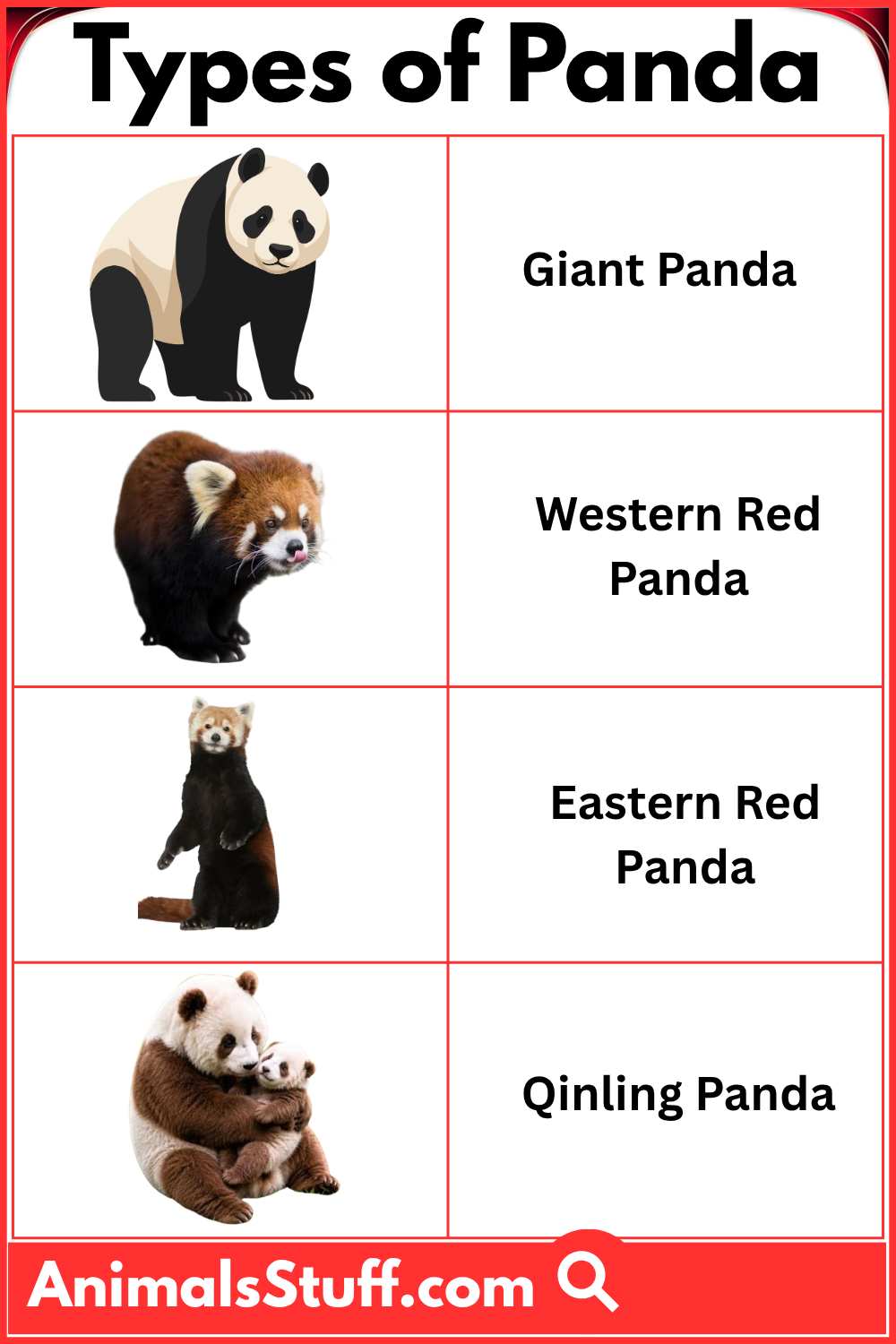
Different Types of Panda with short Descriptions
| Name | US IPA | Short Description |
|---|---|---|
| Giant Panda | /ˈdʒaɪənt ˈpændə/ | A large black-and-white bear from China that feeds mainly on bamboo in mountainous forests. |
| Qinling Panda | /ˈtʃɪnlɪŋ ˈpændə/ | A giant panda subspecies from China’s Qinling Mountains, known for distinctive brown-and-white individuals. |
| Western Red Panda | /ˈwɛstərn rɛd ˈpændə/ | A small reddish tree-dwelling panda found mainly across Himalayan regions and nearby mountain forests. |
| Eastern Red Panda | /ˈiːstərn rɛd ˈpændə/ | A red panda taxon occurring mainly in China and northern Myanmar, with reddish fur and a long tail. |
Interesting Facts About Pandas
- The giant panda is a true member of the bear family.
- Red pandas belong to the separate family Ailuridae.
- Giant pandas are naturally found only in China.
- The Qinling panda is associated with the Qinling Mountains of Shaanxi.
- Some Qinling pandas have brown-and-white fur.
- Giant pandas use an enlarged wrist bone to help grip bamboo.
- Red pandas are excellent climbers.
- Giant pandas do not hibernate.
- Habitat protection is central to panda conservation.
What Does the Giant Panda Eat?
Bamboo is the main food of the giant panda. Although it belongs to the order Carnivora and has the digestive anatomy of a bear, it has become highly specialized for a plant-based diet.
Different Types of Panda with Pictures
Giant Panda
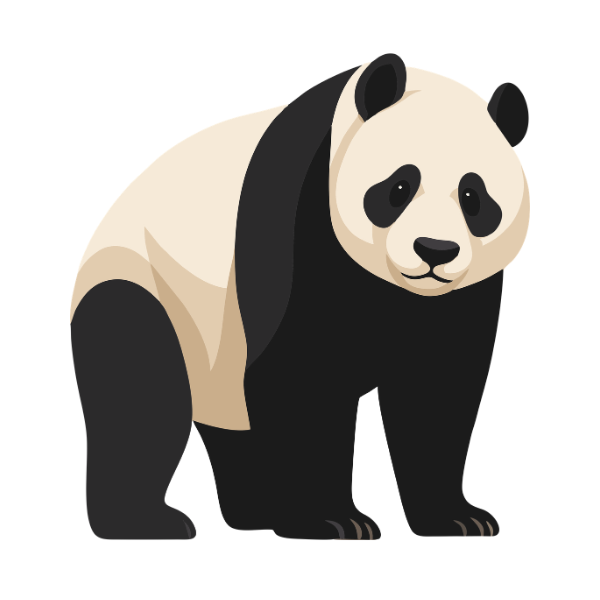
The Giant Panda is a well-known bear native to the mountain forests of central China. Its distinctive black-and-white coat makes it easy to recognize. Giant pandas mainly eat bamboo, although they can also consume other foods. They spend much of their day feeding and resting. Their strong jaws, broad paws, and special wrist bones help them handle bamboo efficiently in their forest habitat.
Qinling Panda
The Qinling Panda is a geographically distinct population of Giant Panda found in the Qinling Mountains of Shaanxi, China. It is recognized as a subspecies by some modern taxonomic sources. Compared with typical giant pandas, Qinling pandas often have a browner-and-white coat and a slightly smaller skull. They live in high mountain forests where bamboo provides most of their food and shelter.

Western Red Panda
The Western Red Panda is a small tree-dwelling mammal found mainly in the eastern Himalayas, including parts of Nepal, Bhutan, and India. It has reddish-brown fur, a long ringed tail, and a rounded face with white markings. Western red pandas are excellent climbers and spend much of their time in trees. Bamboo is an important part of their diet, along with fruits, insects, and other foods.
Eastern Red Panda
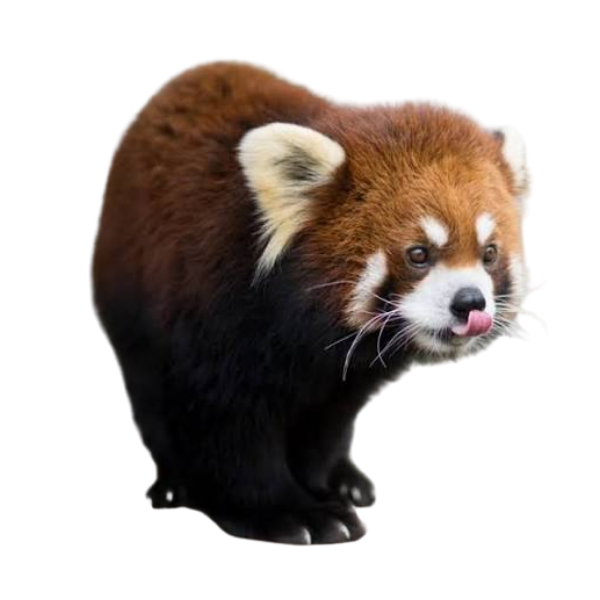
The Eastern Red Panda is a red panda species found mainly in southwestern China and northern Myanmar. It has reddish fur, a long bushy ringed tail, and dark markings on its body and face. This small mammal is adapted for life in cool mountain forests and spends considerable time climbing trees. It feeds largely on bamboo but may also eat fruits, insects, eggs, and other small foods.
How to Identify Different Types of Panda ?
- Giant Panda: large body with a black-and-white coat.
- Qinling Panda: giant panda subspecies associated with the Qinling Mountains; some individuals have brown-and-white coloration.
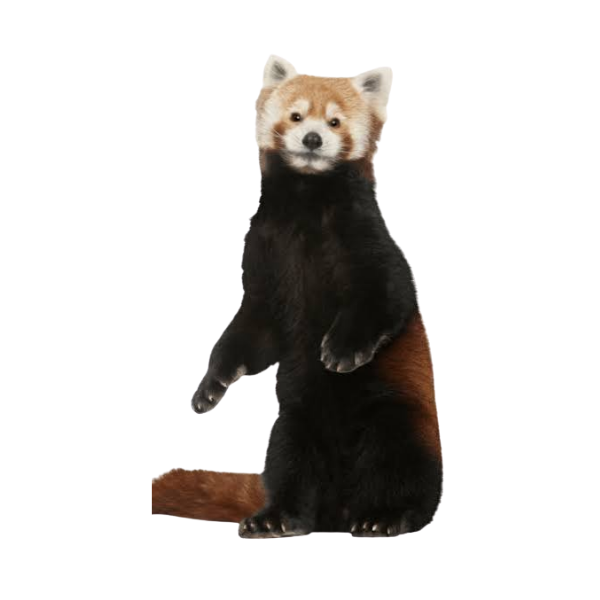
- Western Red Panda: small, reddish-brown, tree-dwelling animal with a long ringed tail.
- Eastern Red Panda: similar in general appearance to other red pandas but recognized as a separate species in the current MDD treatment.
Are There Different Colors of Giant Pandas?
Most giant pandas have the familiar black-and-white coat, but Qinling pandas are notable for their brown-and-white coloration.
Brown pandas are extremely unusual, even within the Qinling population. Their coloring should not be confused with a separate species. They are still giant pandas and are associated with the Qinling subspecies.
Classification of Different Types of Panda
The main distinctions in this guide are:
- Giant panda: one living species, Ailuropoda melanoleuca
- Qinling panda: a recognized subspecies, Ailuropoda melanoleuca qinlingensis
- Western red panda: Ailurus fulgens
- Eastern red panda: Ailurus styani
Did You Know?
Did you know that the red panda is not actually a smaller version of the giant panda?
The two animals received the same common name because of similarities such as their bamboo-based diets and some physical characteristics. Modern classification places them in different families.
More Animals related Articles