Dolphins are intelligent marine mammals found in oceans, coastal waters, rivers, and estuaries around the world. Although many people picture the familiar bottlenose dolphin, there are many different dolphin species with distinct body shapes, colors, habitats, and behaviors. A few species are specially adapted to freshwater environments. This guide to Different Types of Dolphins and Where to Find Them introduces well-known species, explains their natural ranges, and highlights their appearance, diet, behavior, conservation concerns, and other useful facts.
What Are Dolphins?
Dolphins are toothed cetaceans and mammals, not fish. They breathe air through lungs and use a blowhole on top of the head to breathe when they reach the water’s surface.
Dolphins have streamlined bodies that help them move efficiently through water. Many species are highly social and communicate using whistles, clicks, and other sounds. However, their appearance, behavior, habitat, and conservation status can vary considerably from one species to another.
What Do Dolphins Eat?
Dolphins are generally predators that eat other animals. Their diets vary according to species and habitat.
- Fish
- Squid
- Small crustaceans
- Other marine animals
Bottlenose dolphins, for example, commonly feed on fish and squid. Some dolphins cooperate while feeding, while others search individually. Their teeth are adapted for catching prey rather than chewing it in the way humans do.
Different Types of Dolphins
| Dolphin Name | US IPA | Short Description |
|---|---|---|
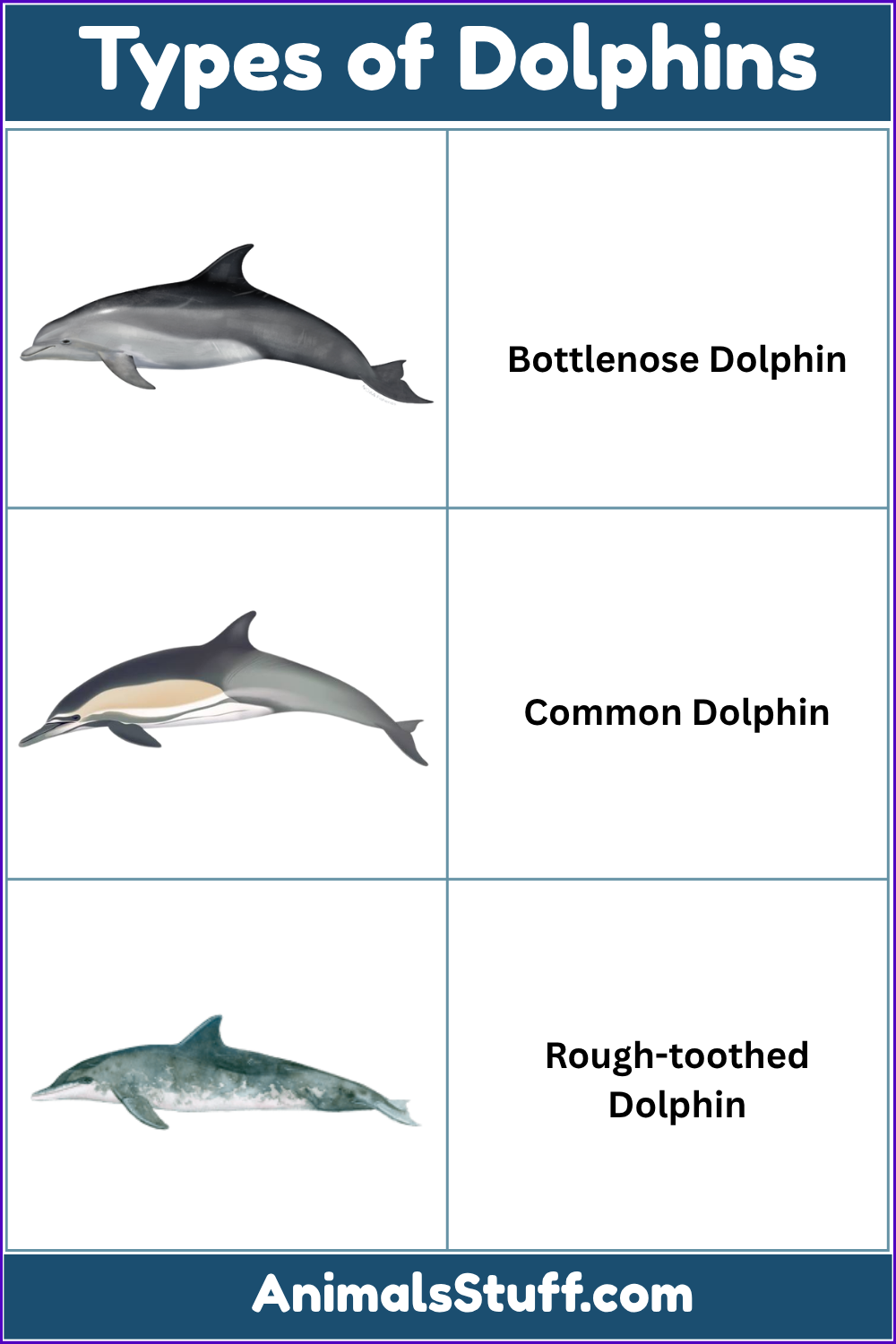
| Bottlenose Dolphin | /ˈbɑːtəlˌnoʊz ˈdɑːlfɪn/ | An intelligent marine dolphin known for its curved mouth, social behavior, and widespread distribution in warm and temperate waters. |
| Common Dolphin | /ˈkɑːmən ˈdɑːlfɪn/ | A fast, social dolphin recognized by its colorful body pattern and found in many temperate and tropical oceans. |
| Rough-toothed Dolphin | /ˌrʌf ˈtuːθt ˈdɑːlfɪn/ | A slender oceanic dolphin with distinctive rough teeth, a long beak, and a preference for warm tropical waters. |
How Do Dolphins Behave?
Many dolphin species are social and live in groups. Group size varies considerably between species and situations. Atlantic spotted dolphins, for example, commonly form groups of several individuals and may sometimes gather in much larger groups.
Dolphins also communicate through sounds. Their behavior is not identical across all species, so it is better to describe dolphins as a diverse group rather than assuming every species behaves in exactly the same way.
Different Types of Dolphins with Pictures
Bottlenose Dolphin
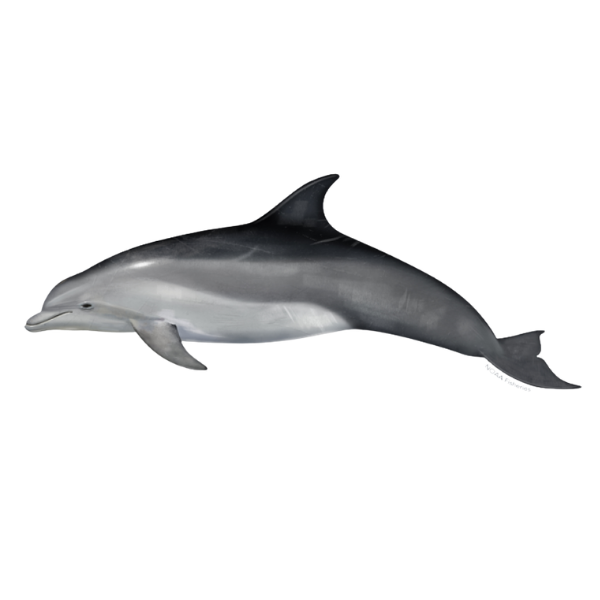
The Bottlenose Dolphin is a well-known marine mammal recognized by its rounded forehead, curved mouth, and smooth gray body. It lives in warm and temperate coastal waters, bays, and open seas. These dolphins are highly social and often travel in groups. They communicate using clicks, whistles, and body movements. Their diet mainly includes fish, squid, and other small marine animals.
Common Dolphin
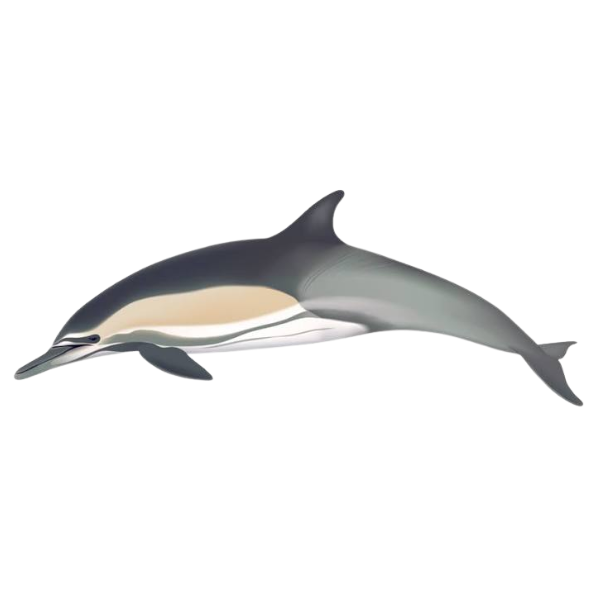
The Common Dolphin is an active and fast-swimming marine mammal found in tropical and temperate oceans. It is recognized by its slender body and attractive yellowish, gray, and white color pattern along the sides. Common Dolphins are highly social and often travel in large groups. They feed mainly on small fish and squid. Their energetic swimming and frequent jumping make them easily noticeable at sea.
Rough-Toothed Dolphin
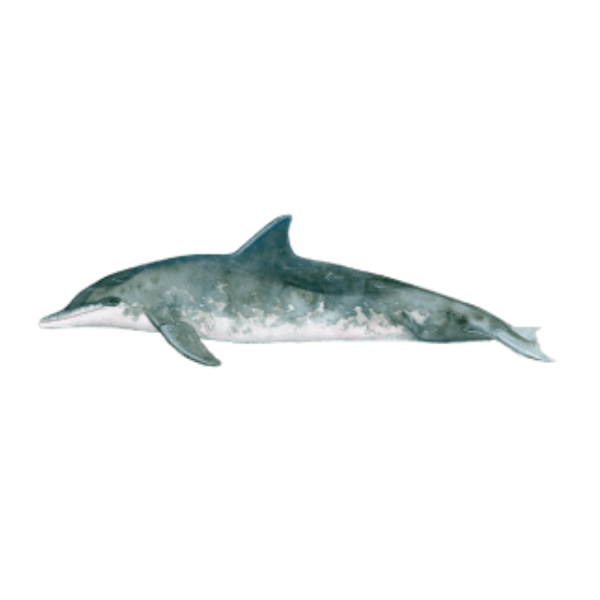
The Rough-Toothed Dolphin is a slender marine mammal named for its unusual teeth, which have a rough surface. It has a long, narrow beak and a dark gray body that may become lighter underneath. This dolphin mainly inhabits warm tropical and subtropical ocean waters. It often travels in groups and feeds on fish, squid, and other marine animals. Its distinctive teeth and long beak help identify it.
How Long Do Dolphins Live?
There is no single lifespan that applies to every dolphin species. Longevity varies with species, sex, population, environmental conditions, and other factors.
Some smaller dolphins have comparatively shorter lifespans, while certain larger species can live for several decades. Researchers use information from stranded animals, long-term studies, identification photographs, teeth, and other scientific methods to estimate age and survival.
For this reason, lifespan figures should always be connected to a particular species rather than presented as one number for all dolphins.
Interesting Facts About Dolphins
- Dolphins are mammals and breathe air through lungs.
- Most dolphins have teeth rather than baleen.
- Dolphins use echolocation to help locate objects and prey.
- Some dolphin species live close to coastlines, while others prefer deep offshore waters.
- The Northern right whale dolphin does not have a dorsal fin.
- The killer whale is the largest member of the dolphin family.
- Hector’s dolphin is one of the world’s smallest dolphins.
- Some dolphins can live in freshwater or estuarine environments.
Frequently Asked Questions About Different Types of Dolphins
How many types of dolphins are there?
There is no single number that is universally used because dolphin classification depends on which taxonomic groups and common-name definitions are included. NOAA’s current directory covers numerous dolphin and porpoise species, while broader references may include additional groups commonly called dolphins.
What is the most common type of dolphin?
The short-beaked common dolphin is among the most abundant and widely distributed dolphin species. Common bottlenose dolphins are also widespread and frequently found in coastal and offshore waters.
Where do dolphins live?
Dolphins live in oceans and seas throughout the world. Some species prefer warm tropical waters, some live in temperate or cold regions, and others inhabit coastal, estuarine, or freshwater environments.
Are dolphins fish?
No. Dolphins are mammals. They breathe air with lungs, give birth to live young, and females feed their calves with milk.
What do dolphins eat?
Most dolphins eat animal prey such as fish and squid. Their exact diet depends on their species, habitat, and the prey available in their local environment.
Are river dolphins related to ocean dolphins?
Some river dolphins are related to oceanic dolphins, but not all belong to the same family. For example, the Indus and Ganges river dolphins belong to the family Platanistidae, while most familiar oceanic dolphins belong to Delphinidae.
Which dolphin is the smallest?
Hector’s dolphin is one of the smallest dolphin species in the world. It is found only in coastal waters around New Zealand.
Which dolphin is the largest?
The killer whale, or orca, is the largest member of the dolphin family, Delphinidae. Despite its common name, it is classified as a dolphin.
Conclusion
The world of dolphins is much more diverse than the familiar bottlenose dolphin suggests. Different Types of Dolphins occupy tropical oceans, temperate seas, coastal waters, estuaries, and even freshwater systems. Species vary in size, appearance, behavior, distribution, and conservation needs. Understanding these differences helps readers appreciate dolphins as a diverse group of mammals rather than treating them as one identical animal. Conservation efforts are especially important for species with restricted ranges or small populations, where fishing bycatch and habitat changes can have serious effects.
Animals related articles