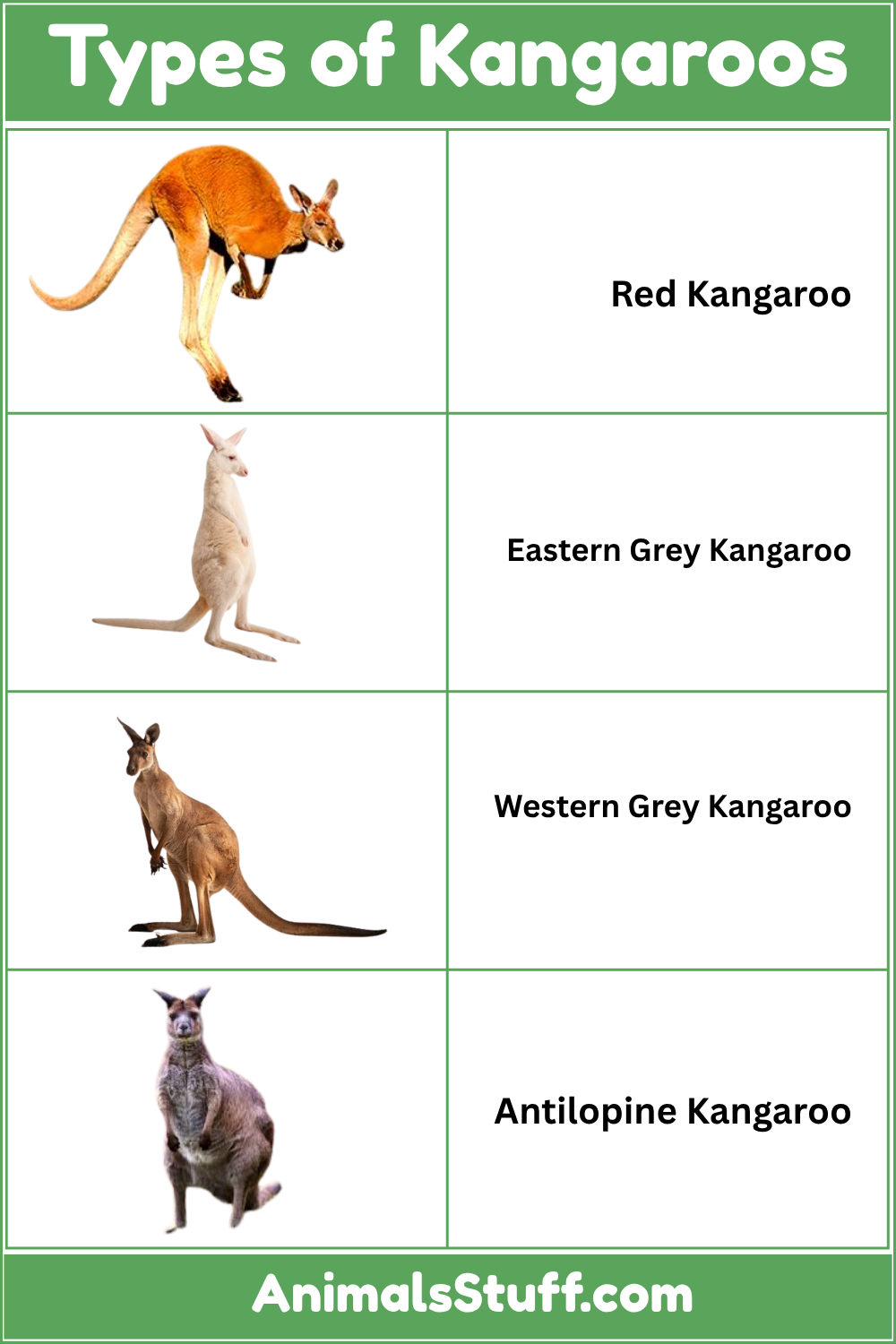
Types of Kangaroos are iconic Australian marsupials known for their powerful hind legs, long tails, and distinctive hopping movements. They inhabit a variety of environments, from dry inland grasslands to open woodlands and tropical savannas. Although many people use the word kangaroo for several jumping marsupials, four commonly recognized species are the Red Kangaroo, Eastern Grey Kangaroo, Western Grey Kangaroo, and Antilopine Kangaroo. This guide explains their appearance, habitats, diets, behavior, and important differences, helping readers identify each species and understand how these remarkable animals survive in Australia’s diverse landscapes.
Types of Kangaroos
| Name | US IPA | Short Description |
|---|---|---|
| Red Kangaroo | /ˌrɛd kæŋɡəˈruː/ | The largest living marsupial, native to Australia’s open grasslands, shrublands, and dry inland regions. |
| Eastern Grey Kangaroo | /ˈiːstərn ɡreɪ kæŋɡəˈruː/ | A large Australian kangaroo with gray fur, commonly found in grasslands, woodlands, and open forests. |
| Western Grey Kangaroo | /ˈwɛstərn ɡreɪ kæŋɡəˈruː/ | A sturdy Australian marsupial with gray-brown fur, living in woodlands, scrublands, and grasslands. |
| Antilopine Kangaroo | /ænˈtɪləˌpaɪn kæŋɡəˈruː/ | A northern Australian kangaroo with a slender build, reddish-brown coloring, and a preference for tropical grasslands. |
Types of Kangaroos with Pictures
1. Red Kangaroo
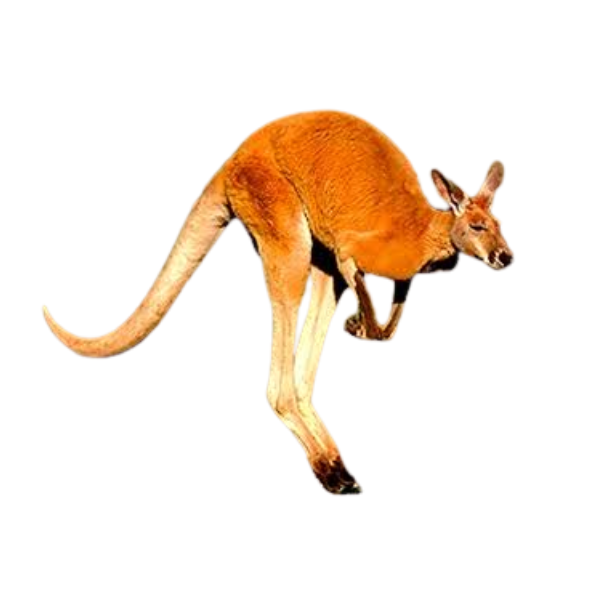
The red kangaroo is the largest living marsupial and is native to Australia. It has powerful hind legs, a long tail, and large ears that help it detect sounds. Adult males often develop reddish-brown fur, while females are usually blue-gray. Red kangaroos inhabit open grasslands, shrublands, and dry inland regions. They mainly eat grasses and other vegetation, obtaining much of their water from food and adapting well to Australia’s hot, dry conditions.
2. Eastern Grey Kangaroo
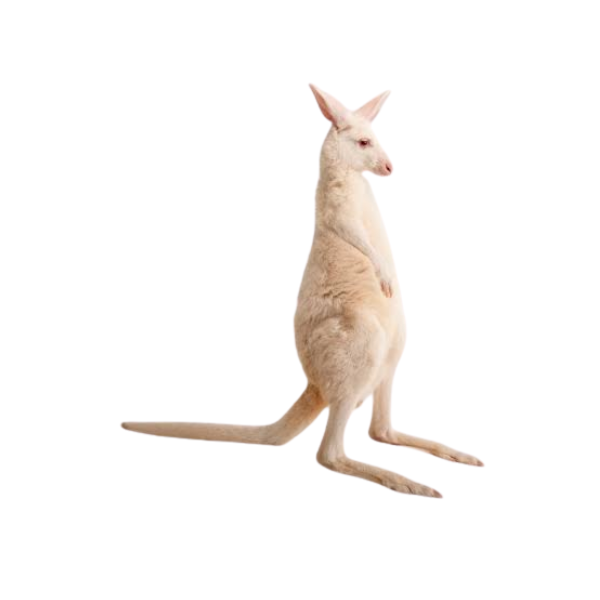
The eastern grey kangaroo is a large marsupial found across eastern Australia, including grasslands, woodlands, and open forests. It has soft gray fur, a long muscular tail, and strong hind legs for hopping over long distances. These kangaroos are often active during cooler hours and rest in shade during hot weather. They mainly graze on grasses and other plants. Eastern grey kangaroos commonly live in groups, although group size changes with food availability and local conditions.
3. Western Grey Kangaroo
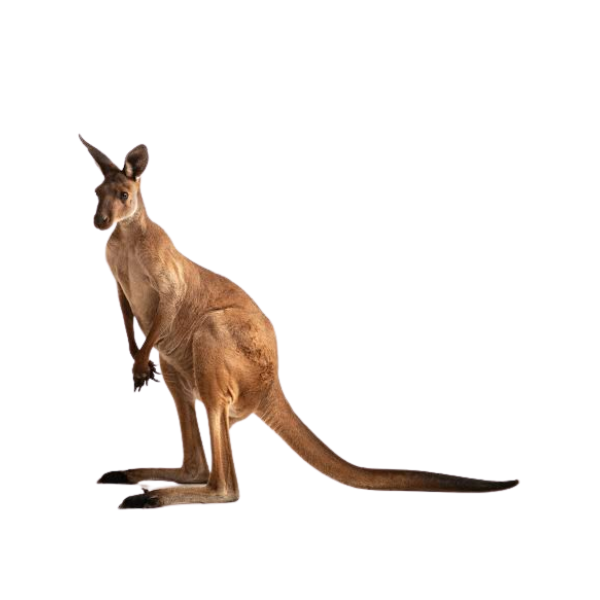
The western grey kangaroo is native to southern and southwestern Australia, where it inhabits woodlands, shrublands, and grasslands. Its coat is generally grayish-brown, and it has strong hind legs, large ears, and a thick tail that supports balance. This species mainly feeds on grasses and other vegetation, often grazing during cooler parts of the day. Western grey kangaroos may gather in groups while feeding or resting. Their distribution and activity depend on local vegetation, rainfall, and seasonal food supplies.
4. Antilopine Kangaroo
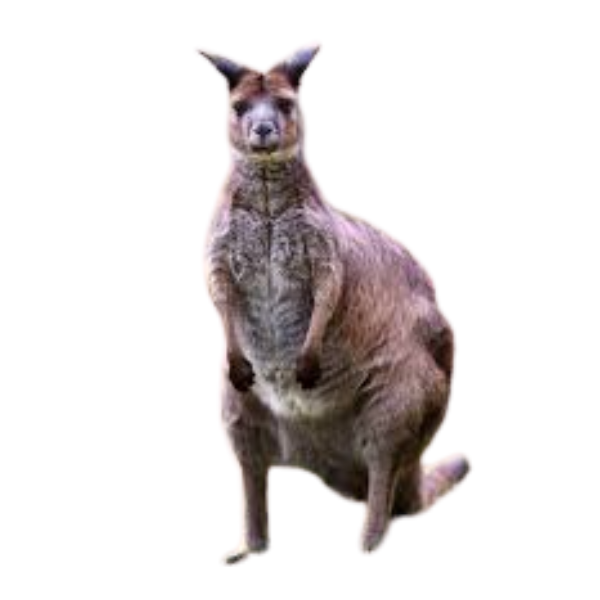
The antilopine kangaroo is a large kangaroo native to northern Australia, especially tropical grasslands and open woodland areas. It has a relatively slender body, long limbs, and reddish-brown fur in males, while females are generally grayer. Its name refers to its antelope-like appearance and build. Antilopine kangaroos mainly feed on grasses and are often seen grazing in groups. They are well adapted to warm tropical environments, where seasonal rainfall influences vegetation growth and food availability.
Kangaroo Behavior and Social Life
Kangaroo behavior varies by species and local conditions. Many gather in loose groups, often called mobs, especially where food and water are available. These groups are not always fixed; individuals may join or leave depending on feeding opportunities, disturbance, and other factors.
Kangaroos generally rest in shaded areas during hotter parts of the day and feed more actively during cooler periods. They remain alert to potential danger and may escape by hopping quickly. Males can compete for access to females, particularly during the breeding season. Social interactions may include posturing, pushing, and kicking.
Frequently Asked Questions About Kangaroo Types
1. What are the four main types of kangaroos?
The four commonly recognized species are the Red Kangaroo, Eastern Grey Kangaroo, Western Grey Kangaroo, and Antilopine Kangaroo. They differ in size, coat color, geographic range, and preferred habitat.
2. Which is the largest kangaroo?
The Red Kangaroo is the largest living marsupial. Adult males are particularly large and often have reddish-brown fur, while females are usually smaller and commonly grayish-blue.
3. What is the difference between eastern and western grey kangaroos?
Eastern grey kangaroos are mainly found in eastern Australia and Tasmania, while western grey kangaroos occur across southern and southwestern regions. Their coats can look similar, so location and additional physical features may help distinguish them.
4. Where does the Antilopine Kangaroo live?
The Antilopine Kangaroo lives in tropical northern Australia, including parts of the Northern Territory and Queensland. It is associated with tropical grasslands and open woodlands.
5. Are kangaroos herbivores?
Yes. Kangaroos are herbivores and mainly eat grasses and other vegetation. Their diets vary with habitat and seasonal food availability.
6. Are kangaroos native to Australia?
Yes. The four commonly recognized kangaroo species are native to Australia. Other members of the broader macropod family also occur in Australia and nearby regions, including New Guinea.
7. What is a baby kangaroo called?
A baby kangaroo is called a joey. It is born very underdeveloped and continues growing inside its mother’s pouch before gradually spending more time outside.
8. Can kangaroos be kept as pets?
Kangaroos are wild animals with specialized space, diet, and behavioral needs. They are not domesticated pets. Laws about keeping native wildlife vary by location, so local regulations should be checked, and wild kangaroos should be observed without handling or feeding them.
Conclusion
The four commonly recognized types of kangaroos—the Red Kangaroo, Eastern Grey Kangaroo, Western Grey Kangaroo, and Antilopine Kangaroo—share powerful hind legs and adaptations for feeding on vegetation, but they differ in appearance, habitat, and distribution. Learning these differences makes kangaroos easier to identify and helps readers understand their role in Australia’s ecosystems. Observing them responsibly and protecting their natural habitats are important steps toward supporting these distinctive marsupials.
More Animals articles