Monkeys are fascinating primates known for their intelligence, expressive faces, agile movements, and varied social behaviors. They live in many environments, including tropical rainforests, mountain forests, grasslands, and woodland habitats. Different kinds of monkeys vary greatly in size, appearance, diet, and the ways they move through their surroundings. This guide introduces 30 well-known monkey types, explains their distinguishing features, and describes their habitats, feeding habits, and behaviors. It also explores the differences between Old World and New World monkeys, helping readers understand how these remarkable animals are classified and recognized.
What Are Monkeys?
Monkeys are mammals belonging to the primate group. They have grasping hands, forward-facing eyes, and relatively flexible limbs that help many species climb, handle food, and navigate complex habitats. Most monkeys have tails, although their length and function vary considerably. Some use their tails for balance, while certain New World species have prehensile tails capable of gripping branches.
Monkeys are not a single uniform group. They include many species with different body sizes, diets, social systems, and environmental adaptations. Some spend almost their entire lives in trees, whereas others regularly travel across the ground.
Types of Monkeys and Short Descriptions
| Monkey Name | US IPA | Short Description |
|---|---|---|
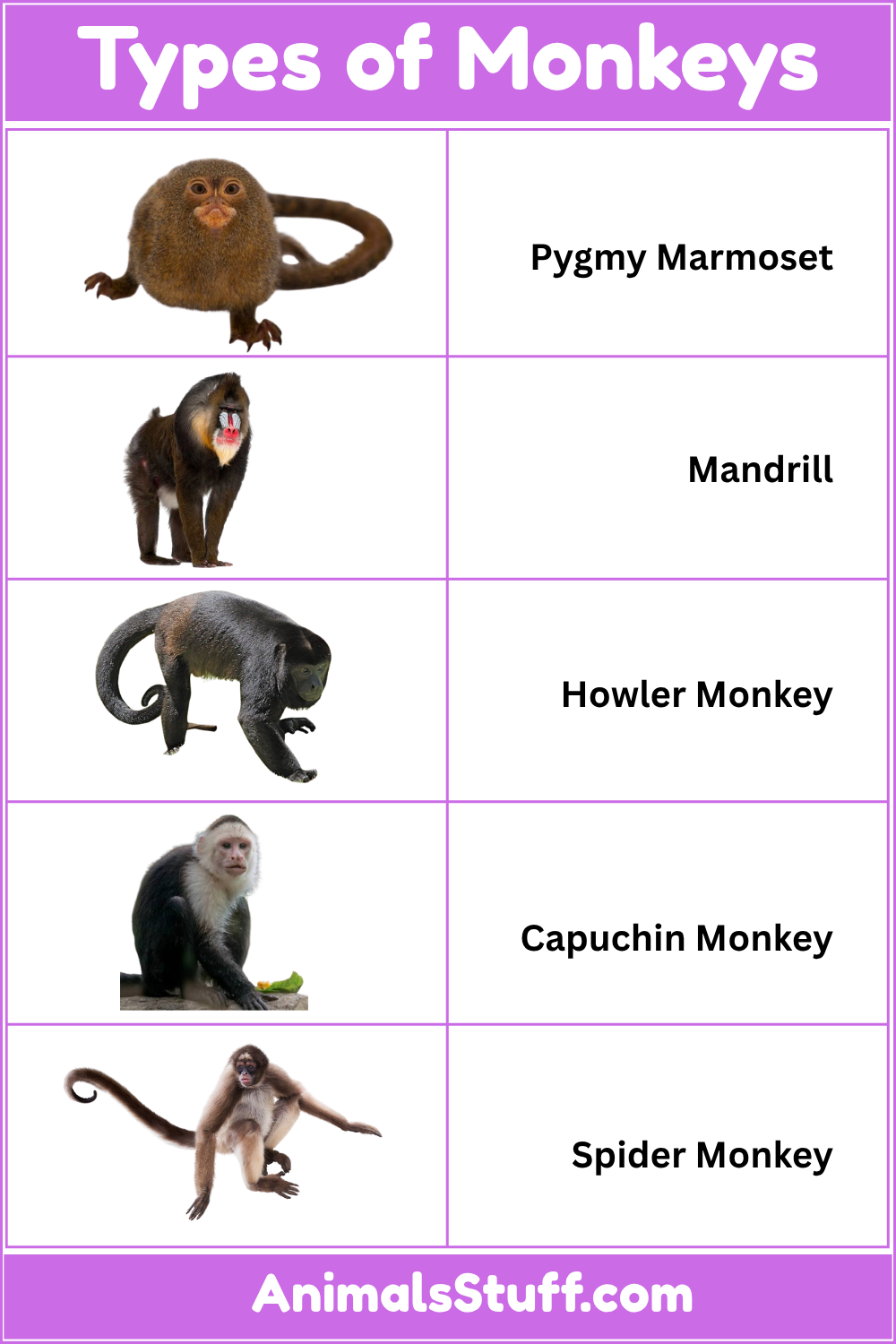
| Pygmy Marmoset | /ˈpɪɡmi ˈmɑːrməˌsɛt/ | One of the world’s smallest monkeys, native to South American rainforests and known for its tiny size. |
| Mandrill | /ˈmændrɪl/ | A large Old World monkey from African rainforests, recognized by its colorful face and prominent muzzle. |
| Howler Monkey | /ˈhaʊlər ˈmʌŋki/ | A Central and South American monkey famous for its loud calls that travel through forests. |
| Capuchin Monkey | /ˈkæpjʊtʃɪn ˈmʌŋki/ | An intelligent Central and South American monkey known for dexterous hands and flexible feeding habits. |
| Spider Monkey | /ˈspaɪdər ˈmʌŋki/ | A long-limbed American monkey with a prehensile tail that helps it move through tree branches. |
| Rhesus Macaque | /ˈriːsəs məˈkæk/ | An adaptable Asian monkey found in varied habitats, including forests, grasslands, and areas near people. |
What Do Monkey Eat?
Most monkeys are omnivorous or primarily plant-eating, but their diets differ according to their anatomy, habitat, and available food. Fruit is important for many New World monkeys, while some Old World monkeys are especially adapted to eating leaves.
- Fruits, berries, and seeds
- Leaves, flowers, buds, and young shoots
- Insects, spiders, and other invertebrates
- Tree gum and sap, particularly for some marmosets
- Roots, bark, and other plant parts
- Small vertebrates or eggs for certain species
Different Kind of Monkey with Pictures
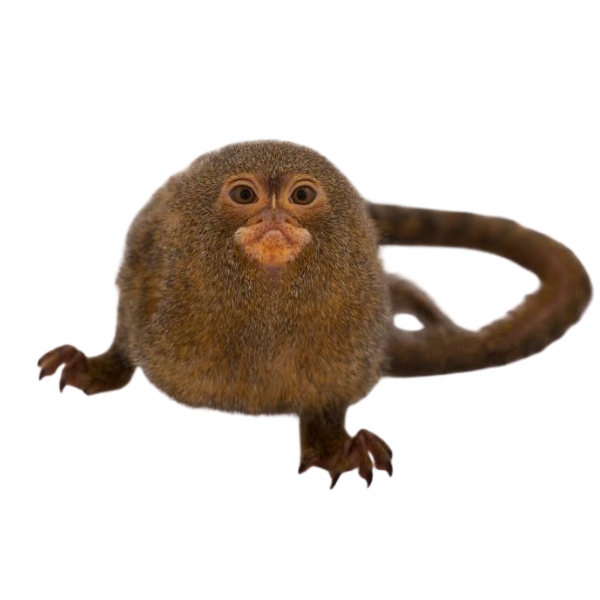
Pygmy Marmoset
The Pygmy Marmoset is one of the smallest monkeys in the world, native to the rainforests of western Amazonia in South America. It has soft brown fur, a long tail, and sharp claws that help it climb tree trunks. This tiny primate mainly feeds on tree sap, gum, and small insects. Pygmy Marmosets usually live in small family groups and spend most of their time in trees.
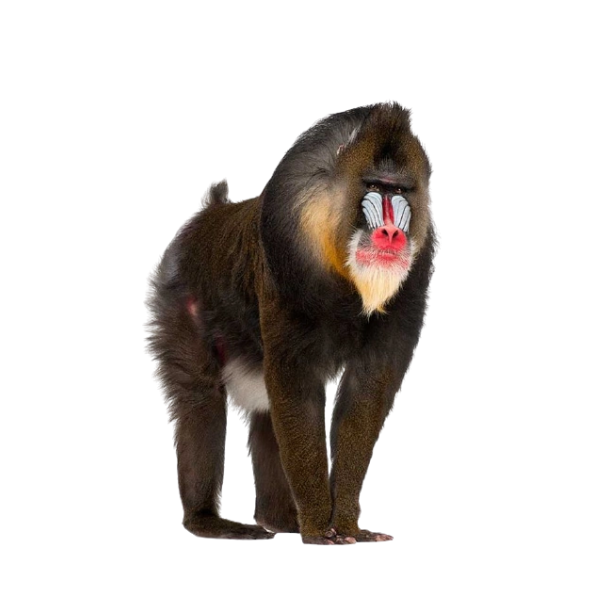
Mandrill
The Mandrill is a large Old World monkey native to the tropical rainforests of Central Africa. It is famous for its colorful face, bright red nose, blue cheek ridges, and olive-green to brown fur. Adult males are much larger than females and have more vivid facial colors. Mandrills live in groups and eat a varied diet that includes fruits, seeds, roots, insects, and small animals.
Howler Monkey
The Howler Monkey is a New World monkey found in the forests of Central and South America. It is best known for its loud calls, which can travel long distances through dense forests. These monkeys have strong limbs and long prehensile tails that help them move among tree branches. Their diet mainly consists of leaves, fruits, and flowers. Howler Monkeys usually live in groups within forest habitats.
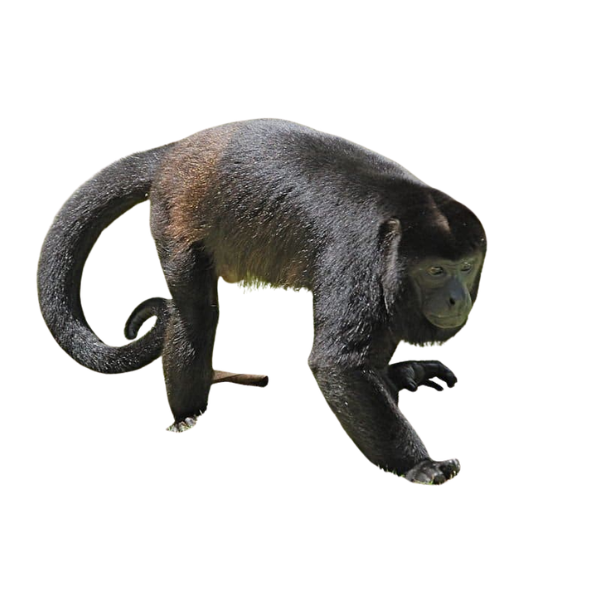
Capuchin Monkey
The Capuchin Monkey is an intelligent New World monkey native to Central and South America. It has a compact body, expressive face, and strong hands that help it handle food and explore its surroundings. Capuchin Monkeys live mainly in trees but also travel on the ground. Their varied diet includes fruits, nuts, seeds, insects, and small animals. They are social primates that commonly live in groups.
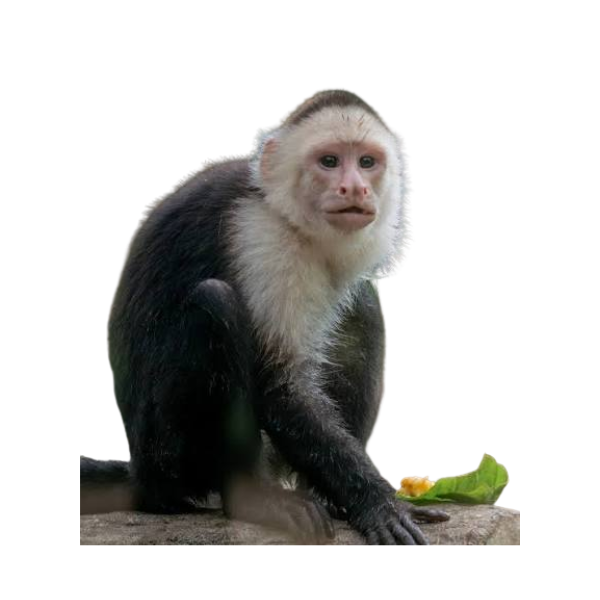
Spider Monkey
The Spider Monkey is a long-limbed New World monkey found in tropical forests of Central and South America. It has a slender body, long arms, and a prehensile tail that works like an extra hand when climbing. Spider Monkeys spend much of their lives in trees and move between branches with remarkable agility. Their diet consists mainly of ripe fruits, along with seeds, leaves, and flowers. They often form social groups.
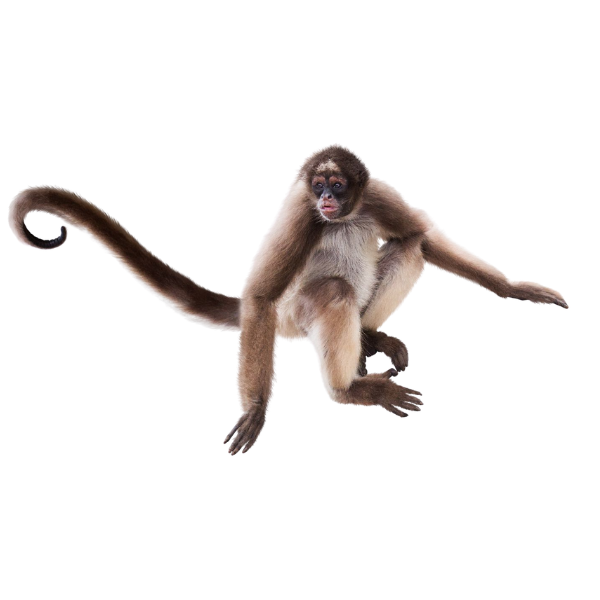
Rhesus Macaque
The Rhesus Macaque is an adaptable Old World monkey native to parts of South, Central, and Southeast Asia. It usually has brown or gray fur, a pinkish face, and a medium-sized body. This species lives in forests, grasslands, mountains, and areas near human settlements. Rhesus Macaques eat fruits, seeds, leaves, insects, and other available foods. They are social animals that live in groups with complex relationships and communication.
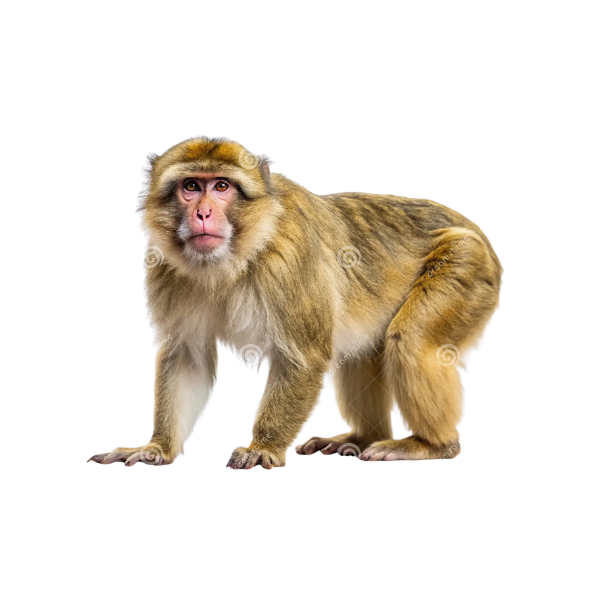
Frequently Asked Questions About Different Types of Monkey
1. How many kinds of monkey are there?
There are hundreds of recognized living monkey species. The exact number varies with scientific classification and ongoing taxonomic research. They are broadly grouped into New World monkeys from Central and South America and Old World monkeys from Africa and Asia.
2. What are the two main groups of monkey?
The two main groups are New World monkeys and Old World monkeys. They differ in geographic range and several anatomical features, including nostril shape and the number of premolars. Their tails and habitats also vary by species.
3. What is the smallest monkey in the world?
The pygmy marmoset is widely recognized as the smallest monkey. It lives in the western Amazon region and feeds on tree gum, sap, insects, and other small foods.
4. What is the largest monkey in the world?
The mandrill is commonly recognized as the largest monkey, particularly when considering the body mass of adult males. Males are much larger than females and have vivid facial coloration. Individual size varies with age and other factors.
5. Which monkeys have tails that can grip branches?
Some New World monkeys have prehensile tails, including spider monkeys and certain woolly monkeys. These tails can grasp branches and help support movement through trees. Most monkeys use their tails for balance rather than gripping.
6. Are monkeys omnivores?
Many monkeys are omnivores, eating both plant material and animal foods such as insects. However, diets differ by species. Geladas eat mainly grasses, while some monkeys rely heavily on fruit, leaves, seeds, tree gum, or other specialized foods.
7. Can monkeys be kept as pets?
Monkeys are wild animals with complex social, dietary, and environmental needs. They are not domesticated pets, and keeping one can be unsafe or harmful to the animal. Laws governing primate ownership differ by country and region, so wildlife protection rules must be checked locally.
8. What is the difference between a monkey and an ape?
Most monkeys have tails, while apes do not have external tails. Apes include gibbons, orangutans, gorillas, chimpanzees, bonobos, and humans. Both groups are primates, but they have different anatomical features and evolutionary histories.
ConclusionDifferent kinds of monkeys show a remarkable range of adaptations, from the tiny pygmy marmoset to the large mandrill. New World monkeys and Old World monkeys differ in their geographic origins and physical characteristics, while individual species vary in habitat, diet, social behavior, and conservation needs. Understanding these differences makes it easier to identify monkeys and appreciate their role in nature.
Animals related articles