Giraffes are among Africa’s most recognizable animals, but they are not all exactly the same. Modern genetic, genomic, morphological, and geographic research supports four distinct giraffe species and seven recognized subspecies. This guide to 4 Types of Giraffe explains how these animals are classified and where each type naturally occurs. You will learn about Northern, Reticulated, Masai, and Southern giraffes, along with their recognized subspecies, coat patterns, habitats, geographic ranges, behavior, diet, conservation concerns, and key differences. The guide also explains why older sources may show a different number of giraffe types and how modern taxonomy has changed.
How Many Types of Giraffe Are There?
- Northern giraffe — Giraffa camelopardalis
- Reticulated giraffe — Giraffa reticulata
- Masai giraffe — Giraffa tippelskirchi
- Southern giraffe — Giraffa giraffa
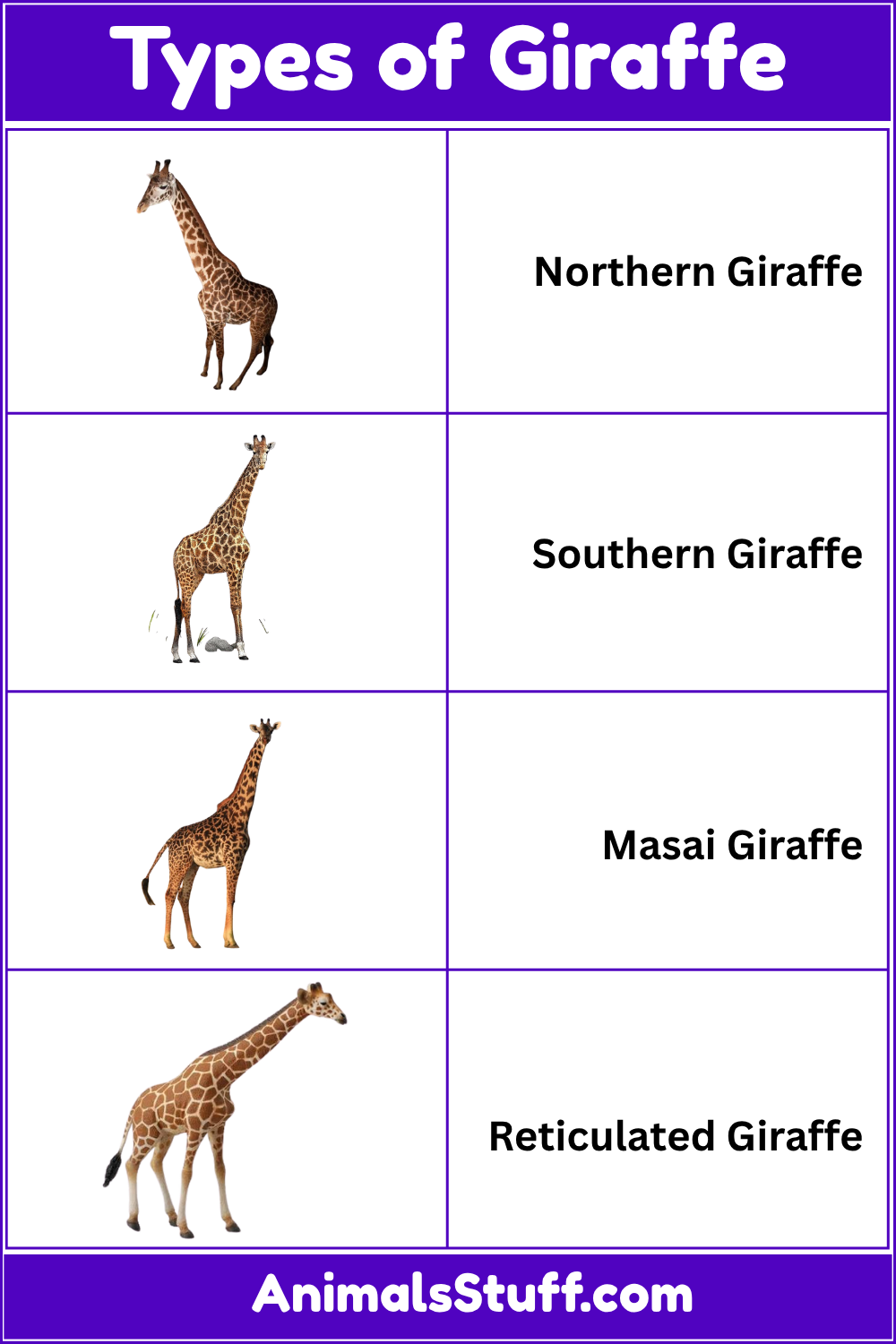
4 Types of Giraffe
| Giraffe Type | US IPA | Short Description |
|---|---|---|
| Northern Giraffe | /ˈnɔrðərn dʒəˈræf/ | A giraffe species found mainly in northern parts of Africa, with several recognized subspecies. |
| Southern Giraffe | /ˈsʌðərn dʒəˈræf/ | A giraffe species native mainly to southern Africa, including Namibia, Botswana, and South Africa. |
| Masai Giraffe | /ˈmɑːsaɪ dʒəˈræf/ | A tall giraffe species recognized for its irregular, jagged-edged patches and African distribution. |
| Reticulated Giraffe | /rɪˈtɪkjəleɪtɪd dʒəˈræf/ | A giraffe known for its striking coat pattern of large patches separated by pale lines. |
Classification of Giraffes
Giraffes belong to the family Giraffidae, which also includes the okapi. They are mammals and ruminants with cloven hooves and a specialized digestive system.
The four current species are genetically distinct lineages. Whole-genome research and subsequent taxonomic evaluation supported their recognition as separate species.
4 Types of Giraffe with Pictures
Northern Giraffe
Northern Giraffes are mainly found in northern parts of Africa. They include several recognized subspecies and are known for their tall bodies, long necks, and patterned coats. Their coat patterns can vary among populations, making them useful for identification. Northern Giraffes live in suitable savanna and woodland environments where they can feed on leaves from trees and shrubs.
Southern Giraffe
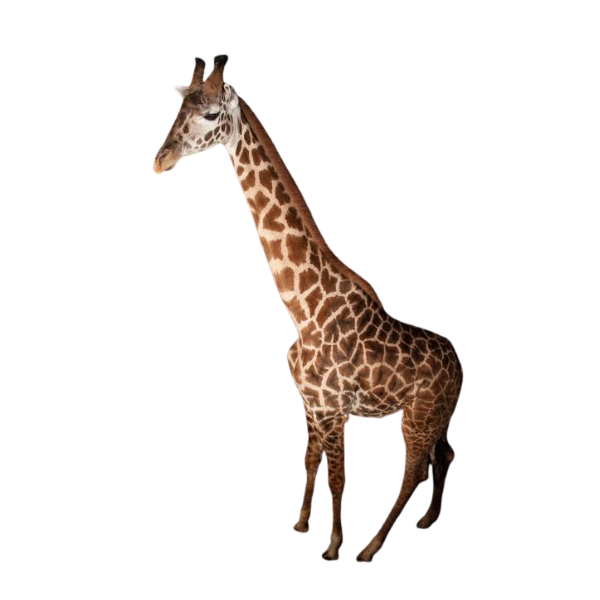
Southern Giraffes are native mainly to southern Africa. They have the typical tall body, long neck, long legs, and patterned coat seen in giraffes. Their populations occur in countries such as Namibia, Botswana, Zimbabwe, Zambia, and South Africa. They commonly feed on leaves and shoots from trees and shrubs.
Masai Giraffe
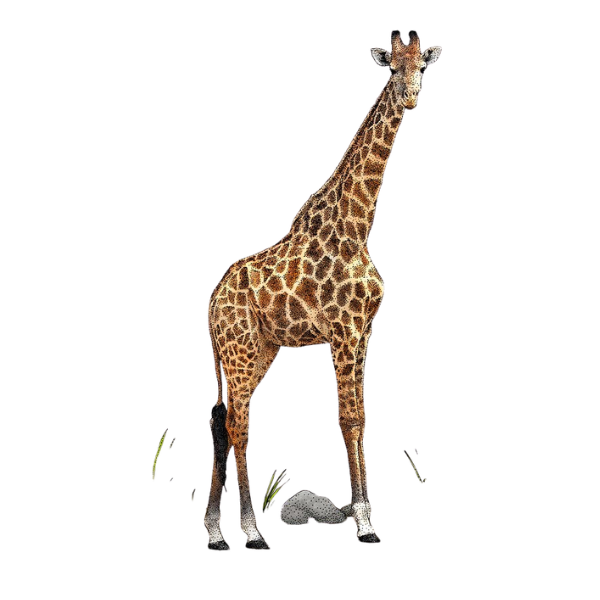
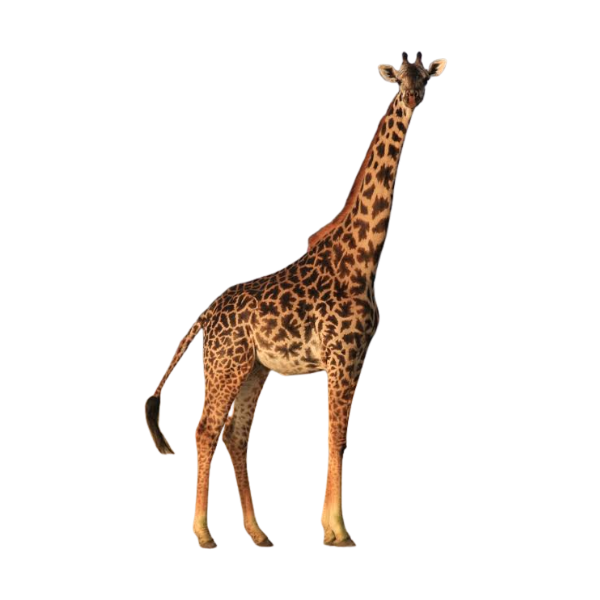
Masai Giraffes are native to parts of East Africa and are especially known for their distinctive coat pattern. Their patches often have irregular, jagged edges, which help distinguish them from some other giraffe species. They are mainly found in savanna, woodland, and open habitats where suitable vegetation is available.
Reticulated Giraffe
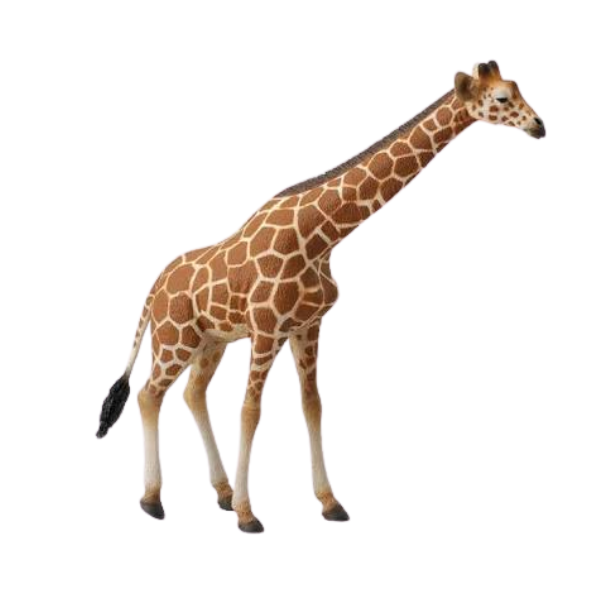
Reticulated Giraffes are recognized for their striking coat pattern, with large reddish-brown patches separated by clear, pale lines. They are native mainly to northeastern Kenya, with populations also occurring in parts of the wider region. Like other giraffes, they use their great height and long necks to reach leaves high above the ground.
Major Threats to Giraffes
- Habitat loss and fragmentation
- Expansion of agriculture and settlements
- Roads, fences, and other barriers to movement
- Illegal hunting and bushmeat exploitation
- Human-wildlife conflict
- Declining habitat quality
- Competition with livestock in some areas
- Political instability in parts of their range
- Small and isolated populations
- Limited information about some remote populations
- Frequently Asked Questions About Giraffe Types
Frequently Asked Questions About Giraffe Types
How many species of giraffe are there?
There are currently four recognized giraffe species: Northern giraffe, Reticulated giraffe, Masai giraffe, and Southern giraffe. This classification was formally supported by the 2025 IUCN SSC Giraffe and Okapi Specialist Group taxonomic assessment.
How many giraffe subspecies are there?
The current 2025 taxonomy recognizes seven giraffe subspecies. Northern giraffe has three, Masai giraffe has two, Southern giraffe has two, and Reticulated giraffe has no recognized subspecies in this framework.
What is the rarest type of giraffe?
Rarity depends on whether you compare species, subspecies, or individual populations. Some Northern giraffe populations are extremely small, while the Luangwa giraffe also has a restricted range and relatively small population. Conservation status and population estimates can change as new surveys become available.
What is the largest type of giraffe?
Giraffes are the tallest living mammals, but there is no scientifically useful basis for saying that one recognized species is simply “the largest giraffe type” in every measurement. Body size varies among individuals, sexes, populations, and environmental conditions.
What is the most common giraffe species?
The Southern giraffe is currently the most numerous of the four recognized giraffe species according to recent Giraffe Conservation Foundation estimates. Its broad southern African distribution includes the Angolan and South African subspecies.
Is Rothschild’s giraffe still a separate type?
Not under the current 2025 taxonomy. Rothschild’s giraffe was previously recognized as a separate subspecies but is now included within the Nubian giraffe because genetic and morphological evidence supports treating them as the same subspecies.
Is Thornicroft’s giraffe still a separate species?
No. Thornicroft’s giraffe is now called the Luangwa giraffe and is classified as Giraffa tippelskirchi thornicrofti, a subspecies of the Masai giraffe. It remains a geographically distinctive and important conservation population.
Are giraffes endangered?
Some giraffe species and populations face serious conservation threats. However, “endangered” should not automatically be applied to every giraffe because conservation status differs among species and populations. The 2025 taxonomy also changed the units that need to be assessed, so species-level IUCN assessments under the new framework are important.
Read Also