The word “fox” does not describe one single species; it is a common name used for several related and fox-like canids. This guide explains what a fox is, the main types of foxes, their scientific classification, habitats, diets, behavior, physical features, and conservation. It also clarifies the difference between true foxes and other canids commonly called foxes, so readers can understand the topic without confusing species, breeds, or informal names.
What Is a Fox?
A fox is a wild canid with a generally slender body, pointed muzzle, upright ears, and a long or bushy tail. Foxes are usually smaller and more lightly built than wolves, although body size varies considerably among species.
Most foxes are omnivorous opportunistic feeders. They may eat small mammals, birds, insects, reptiles, fruits, seeds, and other available foods. Their flexible diet helps many species survive in environments where food availability changes throughout the year.
Foxes can live in deserts, forests, grasslands, mountains, Arctic regions, wetlands, and even landscapes modified by humans.
Types of Fox with Short Description
| Name | US IPA | Short Description |
|---|---|---|
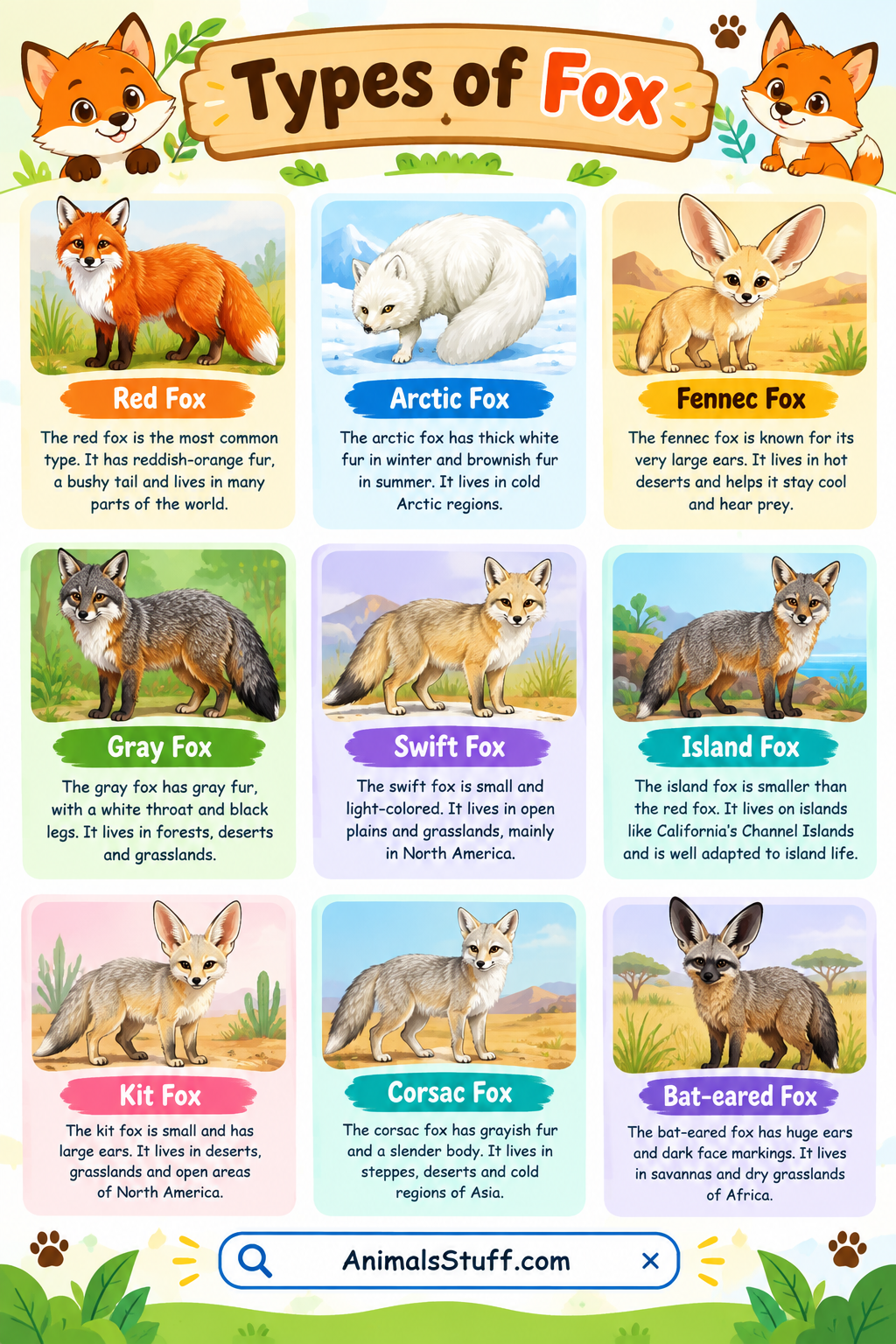
| Red Fox | /ˈrɛd fɑːks/ | A widespread fox recognized by its reddish coat, pointed face, bushy tail, and remarkable habitat flexibility. |
| Arctic Fox | /ˈɑːrktɪk fɑːks/ | A cold-adapted fox with seasonal fur that helps it survive harsh Arctic environments and extreme temperatures. |
| Fennec Fox | /ˈfɛnɛk fɑːks/ | A tiny desert fox famous for oversized ears, pale fur, and adaptations for hot, dry environments. |
| Bengal Fox | /ˈbɛŋɡəl fɑːks/ | A small South Asian fox inhabiting grasslands, scrub, agricultural landscapes, and other relatively open habitats. |
| Blanford’s Fox | /ˈblæn.fərdz fɑːks/ | A small desert fox of southwestern Asia, adapted to rocky terrain and arid mountain environments. |
| Cape Fox | /ˈkeɪp fɑːks/ | A small southern African fox with grayish fur that commonly inhabits dry and open landscapes. |
| Corsac Fox | /ˈkɔːrsæk fɑːks/ | A pale, long-legged fox associated with steppe habitats across parts of Central and northern Asia. |
| Tibetan Sand Fox | /təˈbiːtən sænd fɑːks/ | A high-altitude Asian fox recognized for its square-looking face and adaptation to cold, open plateaus. |
| Kit Fox | /ˈkɪt fɑːks/ | A small North American desert fox with large ears, slender limbs, and a narrow muzzle. |
| Pale Fox | /ˈpeɪl fɑːks/ | A lightly colored West African fox associated with dry savannas, grasslands, and semi-arid environments. |
| Rüppell’s Fox | /ˈruːpəlz fɑːks/ | A desert-adapted fox found across parts of North Africa, the Middle East, and southwestern Asia. |
| Swift Fox | /ˈswɪft fɑːks/ | A small North American fox of open grasslands, known for its speed and nocturnal activity. |
| Gray Fox | /ˈɡreɪ fɑːks/ | A North American fox with gray fur that can climb trees and differs taxonomically from true foxes. |
| Island Fox | /ˈaɪlənd fɑːks/ | A small fox found on several California Channel Islands, with populations adapted to island environments. |
| Bat-Eared Fox | /ˌbæt ˈɪrd fɑːks/ | An African fox-like canid recognized by exceptionally large ears and a diet rich in insects. |
Fox Classification and Scientific Family
- Kingdom: Animalia
- Phylum: Chordata
- Class: Mammalia
- Order: Carnivora
- Family: Canidae
All Foxes and Pictures
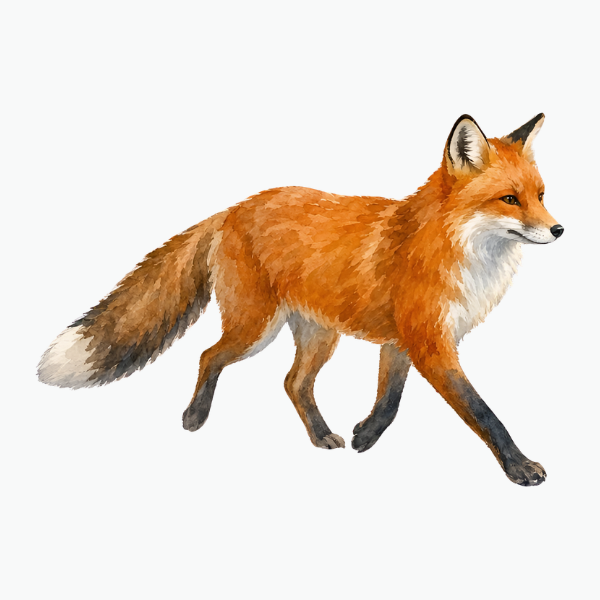
Red Fox
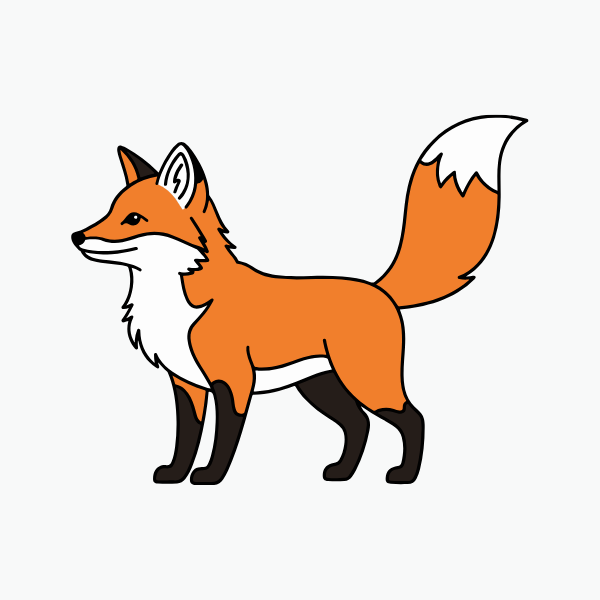
The Red Fox (Vulpes vulpes) is the most widespread fox species and occurs naturally across large parts of the Northern Hemisphere, with introduced populations in some other regions. Its coat can vary considerably, although reddish coloration is common. It has a pointed muzzle, triangular ears, and a long bushy tail. Red foxes occupy forests, grasslands, mountains, farmland, suburbs, and urban areas. They are opportunistic omnivores and may eat rodents, rabbits, birds, insects, fruits, and other available foods.
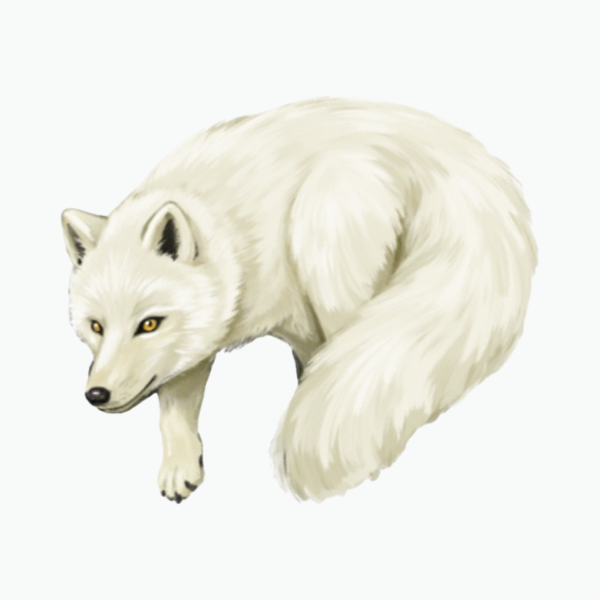
Arctic Fox
The Arctic Fox (Vulpes lagopus) is specialized for life in northern Arctic environments. It has a compact body, short ears, and thick fur that provides insulation in severe cold. Its coat changes seasonally, with many individuals becoming white in winter and darker brown or grayish in summer, although color forms vary. Arctic foxes eat rodents, birds, eggs, carrion, and other available foods. Their ability to withstand extreme cold makes them one of the most specialized foxes.
Fennec Fox
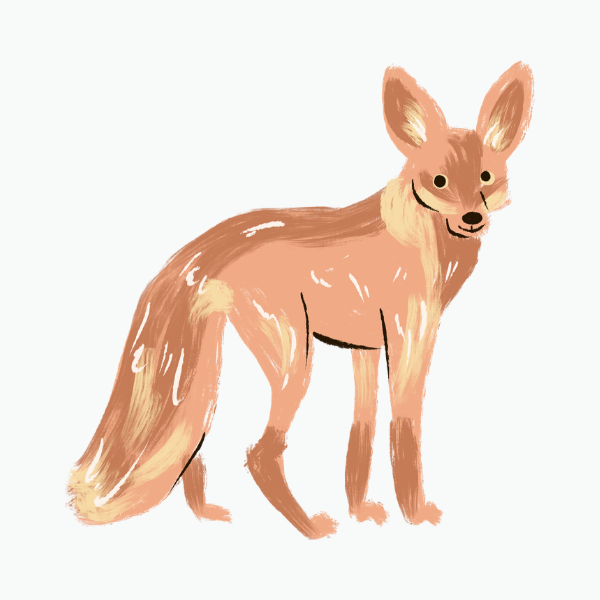
The Fennec Fox (Vulpes zerda) is the smallest fox species and is strongly associated with sandy deserts of North Africa. Its enormous ears are one of its most recognizable features and help with heat management as well as detecting sounds. Its pale coat blends with sandy surroundings. Fennec foxes are mainly nocturnal and spend much of the hottest part of the day in underground shelters. Their diet includes insects, small animals, roots, fruits, and other available desert foods.
Bengal Fox
The Bengal Fox (Vulpes bengalensis), also known as the Indian fox, occurs across parts of the Indian subcontinent. It commonly uses grasslands, scrub, semi-arid areas, and agricultural landscapes. This relatively small fox has a slender body, pointed ears, and a bushy tail. Its diet is varied and can include rodents, insects, reptiles, birds, eggs, and plant material. Habitat conversion and changes to natural grasslands can affect populations in parts of its range.

Blanford’s Fox
Blanford’s Fox (Vulpes cana) is a small fox associated with arid and rocky regions of the Middle East and parts of southwestern Asia. It has a relatively delicate body, large ears, and a long bushy tail. Rocky slopes and mountainous desert landscapes provide important habitat. Its diet is varied and may include insects, small mammals, reptiles, birds, and plant material. The species is adapted to dry environments and can live where vegetation and surface water are limited.
Cape Fox
The Cape Fox (Vulpes chama) is a small fox native to southern Africa. It has a grayish coat, a dark-tipped or darkly marked tail, and relatively large ears. It is associated with dry open habitats including grasslands, scrublands, and semi-desert environments. Cape foxes are primarily nocturnal and generally forage alone. Their diet can include small mammals, insects, birds, reptiles, and fruits. They use underground dens for shelter and raising young.

Corsac Fox
The Corsac Fox (Vulpes corsac) is a small fox of the steppes and semi-desert regions of Central and northern Asia. Its pale, sandy coat provides useful camouflage in open landscapes. Corsac foxes have relatively large ears and long legs compared with some other desert-adapted foxes. They feed mainly on small mammals and other available prey. Their populations can be influenced by severe weather, food availability, habitat conditions, and human activities across their broad range.

Tibetan Sand Fox
The Tibetan Sand Fox (Vulpes ferrilata) lives mainly on high-altitude plateaus of the Tibetan region and surrounding parts of Central Asia. It has a distinctive broad or square-looking face, small rounded ears, and dense fur suited to cold environments. The species often occurs in open alpine and semi-arid landscapes. Its diet includes small mammals, particularly pikas, along with other available prey. It can occur at very high elevations where environmental conditions are demanding.

Kit Fox
The Kit Fox (Vulpes macrotis) is a small North American fox adapted to dry and open environments, particularly deserts and semi-desert regions of the southwestern United States and northern Mexico. Its oversized ears help it detect sounds and may also assist with heat regulation. Kit foxes have pale fur, slender bodies, and relatively small feet. They are mainly nocturnal and feed on rodents, rabbits, insects, reptiles, and other small prey available in their habitat.
Pale Fox
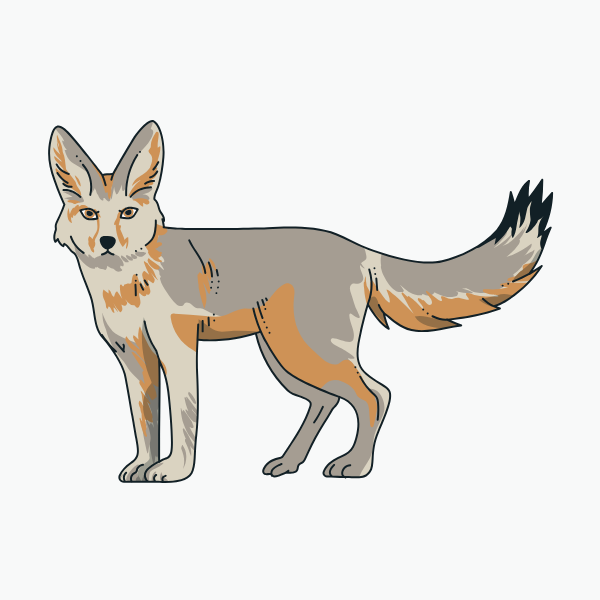
The Pale Fox (Vulpes pallida) is a small African fox associated with the Sahel and surrounding dry savanna regions. Its pale sandy coat helps it blend into its environment. Like several other desert and semi-desert foxes, it has relatively large ears and a slender body. Its diet is opportunistic and may include insects, small mammals, birds, reptiles, fruits, and other foods. Information about this species is less extensive than for the widely studied red or Arctic fox.
Swift Fox
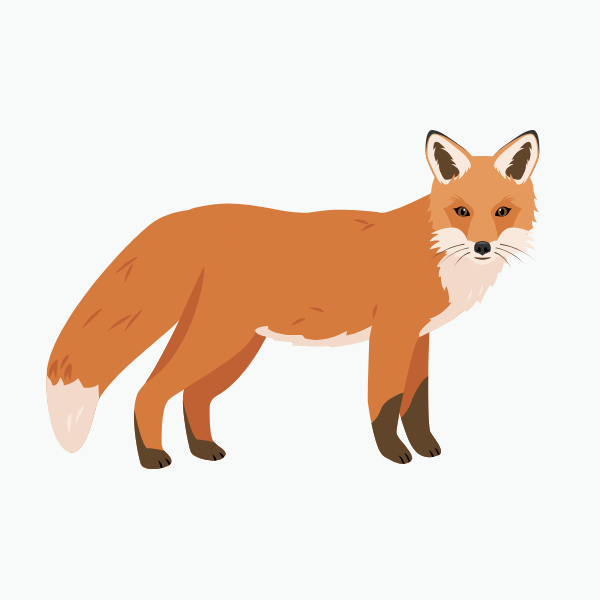
The Swift Fox (Vulpes velox) is a small North American fox associated primarily with open grassland habitats. It has a compact body, large ears, and a relatively short muzzle. Despite its common name, its speed is only one part of its natural history. Swift foxes are largely nocturnal and feed on small mammals, insects, birds, reptiles, and other available prey. Habitat loss and changes to native grassland ecosystems have affected the species in parts of its historical range.
Gray Fox
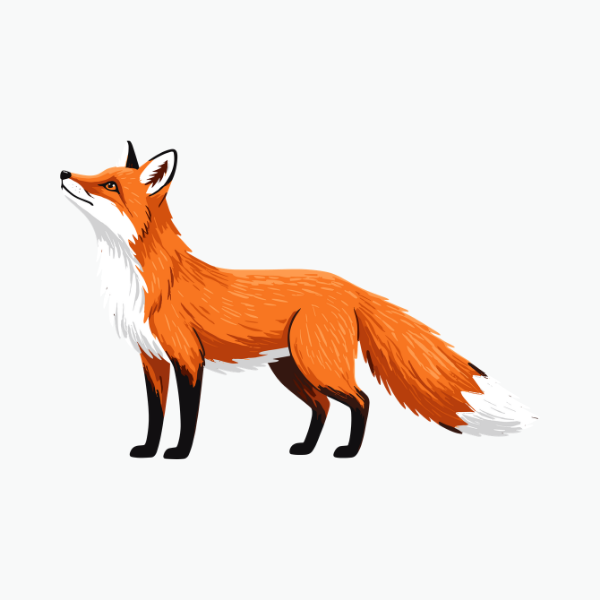
The Gray Fox (Urocyon cinereoargenteus) is a distinctive North American fox that differs from true foxes of the genus Vulpes. Its gray coat, black-tipped tail, and ability to climb trees make it especially recognizable. Gray foxes occur in forests, brushy habitats, and mixed landscapes. They eat small mammals, birds, insects, fruits, and other foods. Their semi-retractable claws and climbing ability allow them to use trees more effectively than many other fox species.
Island Fox
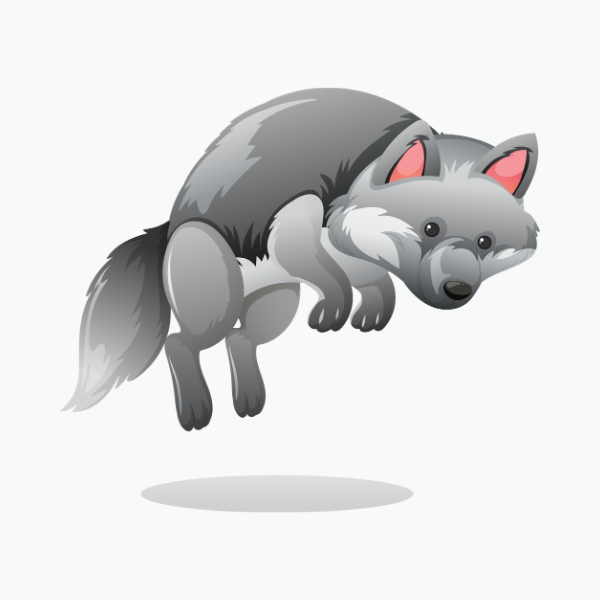
The Island Fox (Urocyon littoralis) is a small fox restricted to several of California’s Channel Islands. It evolved in an isolated island environment and shows variation among island populations. Its diet can include insects, fruits, vertebrates, terrestrial mollusks, and other available foods. The species experienced serious historical population declines, including threats from non-native golden eagles and disease. Conservation programs helped support recovery, but its restricted island distribution still makes it an important conservation concern.
Bat-Eared Fox
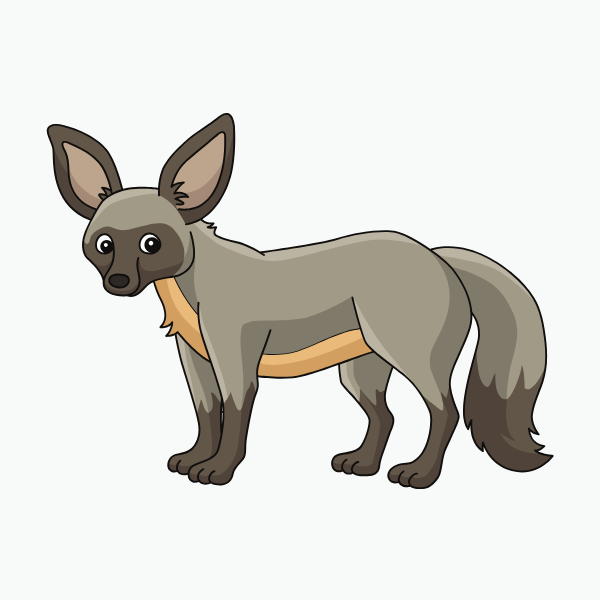
The Bat-Eared Fox (Otocyon megalotis) is an African fox-like canid famous for its enormous ears. Unlike many foxes that rely heavily on vertebrate prey, it specializes strongly in insects, particularly termites and other social insects. Its teeth are adapted to this unusual diet. Bat-eared foxes generally live in dry grasslands, savannas, and scrub habitats. They can occur in social groups and use burrows for shelter. Their large ears are useful for locating insects and communicating.
What Do Foxes Look Like?
- Pointed muzzle
- Upright ears
- Slender body
- Bushy tail
- Narrow head
- Sharp teeth
- Four-legged walking posture
- Thick or moderately dense fur
Where Do Foxes Live?
- Deserts
- Arctic tundra
- Grasslands
- Savannas
- Temperate forests
- Tropical forests
- Mountains
- Shrublands
- Agricultural landscapes
- Coastal areas
- Urban and suburban environments
What Do Foxes Eat?
- Rodents
- Rabbits
- Birds
- Eggs
- Insects
- Reptiles
- Amphibians
- Fish
- Fruits
- Berries
- Seeds
- Carrion
Fox Behavior and Social Life
Fox behavior differs among species. Many foxes are solitary hunters or forage alone, while some species form family groups or social units.
Many foxes are most active around dusk, at night, or during the early morning, although activity patterns can change according to habitat, season, food availability, and human disturbance.
Foxes vs. Types of Bear with Pictures
Foxes and bears are both members of the order Carnivora, but they are very different animals. Foxes belong to the dog family Canidae, while bears belong to the family Ursidae.
A fox is generally much smaller, more slender, and adapted for quick movement. Bears have heavier bodies, powerful limbs, and different feeding strategies.
Are Foxes Wild or Domesticated?
Foxes are primarily wild animals. They have not undergone the same widespread domestication process as dogs.
Some foxes are kept in captivity for conservation, research, education, or other regulated purposes. Selective breeding experiments have also been conducted with foxes, but this does not mean that foxes as a whole are domesticated animals like dogs.
Fox Lifespan
There is no single lifespan that applies to every fox species. Lifespan depends on species, habitat, disease, food availability, predation, accidents, and human-related threats.
Foxes in captivity may live longer than wild individuals because they receive regular food and veterinary care and face fewer environmental dangers. For wild foxes, survival can vary considerably depending on local conditions.
Are Foxes Endangered?
The conservation status of fox species varies considerably. Some species have relatively stable populations, while others face significant threats because of their restricted ranges or habitat pressures.
The Island Fox, for example, has had serious conservation challenges and has been the focus of intensive recovery work. IUCN material identifies threats including non-native golden eagle predation and disease in some island populations.
What Is the Difference Between a Fox Species and a Fox Breed?
A species is a biological classification used to identify a distinct evolutionary group. The Red Fox and Arctic Fox, for example, are separate species.
A breed usually refers to a domesticated animal population developed through selective breeding. Dogs have hundreds of recognized breeds, but wild foxes are not normally divided into dog-like breeds.
Foxes may have regional populations, subspecies, color forms, or local names, but these should not automatically be called breeds.
Are There Foxes That Are Not True Foxes?
- Gray Fox — Urocyon
- Island Fox — Urocyon
- Bat-Eared Fox — Otocyon
- Crab-Eating Fox — Cerdocyon
- Culpeo — Lycalopex
- Darwin’s Fox — Lycalopex
- Pampas Fox — Lycalopex
How to Identify Different Types of Fox
- Body size
- Ear size and shape
- Muzzle shape
- Tail length and markings
- Coat color
- Habitat
- Geographic location
- Activity pattern
- Distinctive facial markings
Why Are Foxes Important to Ecosystems?
Foxes can play important ecological roles as predators and omnivores. By feeding on rodents, insects, birds, reptiles, fruits, and other resources, they participate in food webs and influence populations of other organisms.
Some foxes also consume fruits and can contribute to seed movement. Their ecological role varies by species and habitat, so it is better to consider each fox within its particular ecosystem rather than assuming that every species performs exactly the same function.
Frequently Asked Questions About Foxes
How many types of foxes are there?
There are 12 living species in the genus Vulpes, commonly called true foxes. In addition, several species from other genera are commonly called foxes, including gray, island, bat-eared, crab-eating, and South American foxes.
What is the most common type of fox?
The Red Fox (Vulpes vulpes) is the most widespread fox species and has one of the broadest geographic distributions among foxes.
What is the smallest fox?
The Fennec Fox is generally recognized as the smallest living fox species. Its extremely large ears are one of its most distinctive features.
Is a fox a dog?
A fox is not a domestic dog, but foxes and dogs are both members of the Canidae family. They are different animals with different species and evolutionary histories.
Are foxes carnivores?
Foxes belong to the order Carnivora, but most fox species are omnivorous or opportunistic feeders rather than strict carnivores.
Where do foxes live?
Foxes live in many environments, including deserts, forests, grasslands, mountains, Arctic tundra, savannas, and human-modified landscapes.
Is the gray fox a true fox?
No. The Gray Fox belongs to the genus Urocyon, while true foxes belong to the genus Vulpes.
Are foxes endangered?
The conservation status varies by species. Some foxes are widespread, while others have restricted ranges and significant conservation concerns. The Island Fox, for example, has required substantial conservation efforts.
More Animals Related Articles