Animals are living creatures found in almost every part of the world. They live in forests, deserts, mountains, grasslands, oceans, farms, and even around our homes. There are many different types of animals, and each one has unique features, habitats, diets, and ways of living. Camels are especially interesting animals because they are well adapted to hot and dry desert environments. In this article, we will learn what camels are, their main types, where they live, what they eat, how they survive in deserts, and some interesting facts about these remarkable animals.
What Are Camels?
Camels are large mammals belonging to the camel family Camelidae. They are best known for their ability to live in dry environments where water and food may be limited. Camels have long legs, broad feet, thick eyelashes, and special adaptations that help protect them from heat and blowing sand.
A common misconception is that a camel stores water in its hump. Camels do not store water in their humps. Their humps mainly store fat, which can provide energy when food is scarce.
Camels are also domesticated animals in many parts of the world and have been used for transportation, carrying goods, milk, meat, and other purposes for thousands of years.
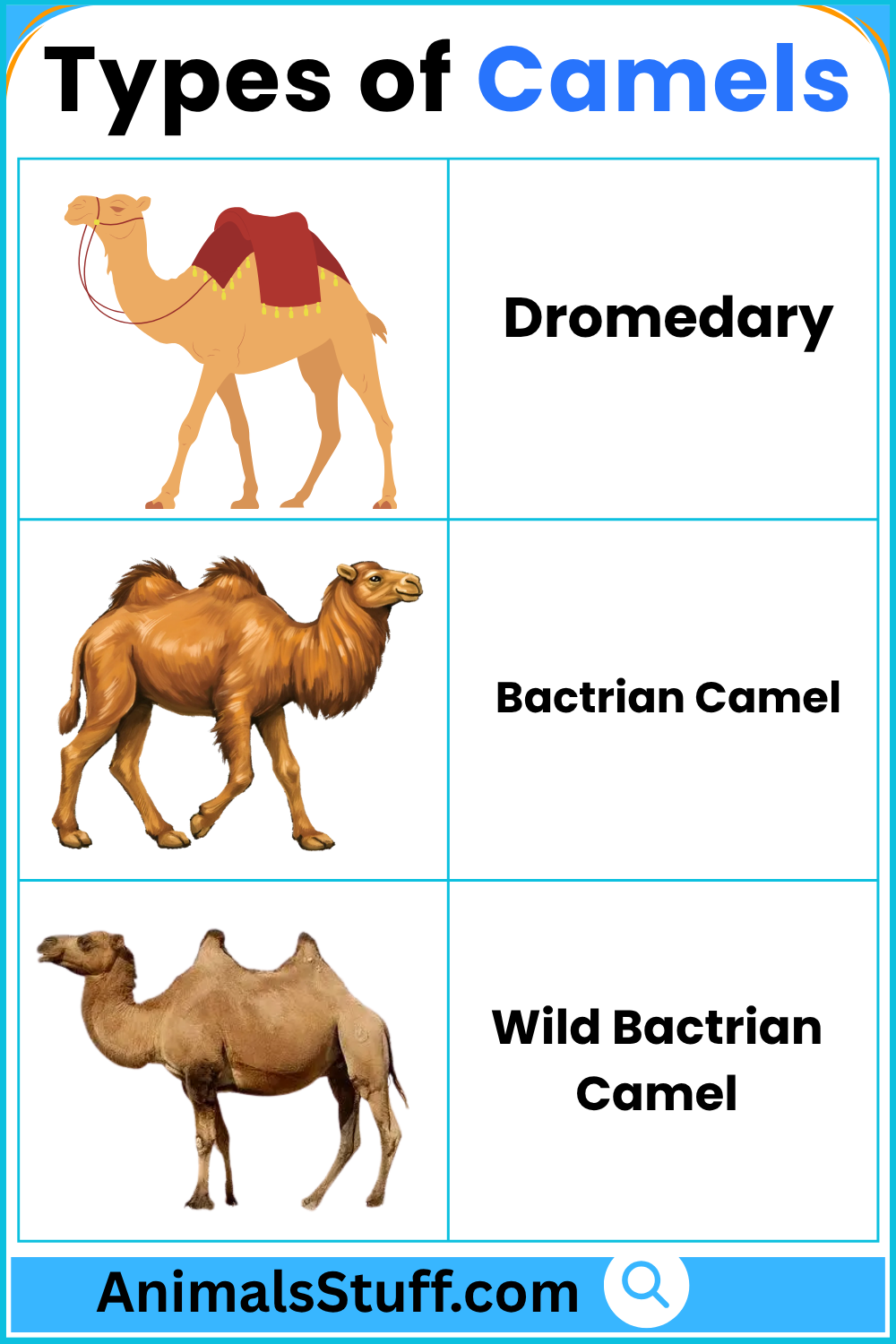
How Many Types of Camels Are There?
- Dromedary Camel – one hump
- Bactrian Camel – two humps
- Wild Bactrian Camel – two humps
What Makes a Camel Truly Unique
Types of Camels, US IPA, and Short Descriptions
| Camel Type | US IPA | Short Description |
|---|---|---|
| Dromedary Camel | /ˈdrɑːməˌdɛri ˈkæməl/ | A one-humped camel adapted to hot, dry deserts and widely used for transportation, milk, meat, and carrying loads. |
| Bactrian Camel | /ˈbæktriən ˈkæməl/ | A two-humped domesticated camel adapted to cold deserts and harsh climates across parts of Central and East Asia. |
| Wild Bactrian Camel | /waɪld ˈbæktriən ˈkæməl/ | A critically endangered two-humped wild camel that survives in remote deserts of Central Asia under extreme conditions. |
Where Do Camels Live?
Camels live mainly in deserts, dry grasslands, rocky areas, and other arid environments.
- Dromedary camels are common in hot, dry regions.
- Domestic Bactrian camels are associated with Central and East Asia.
- Wild Bactrian camels survive in remote deserts of Central Asia.
Types of Camels with Pictures
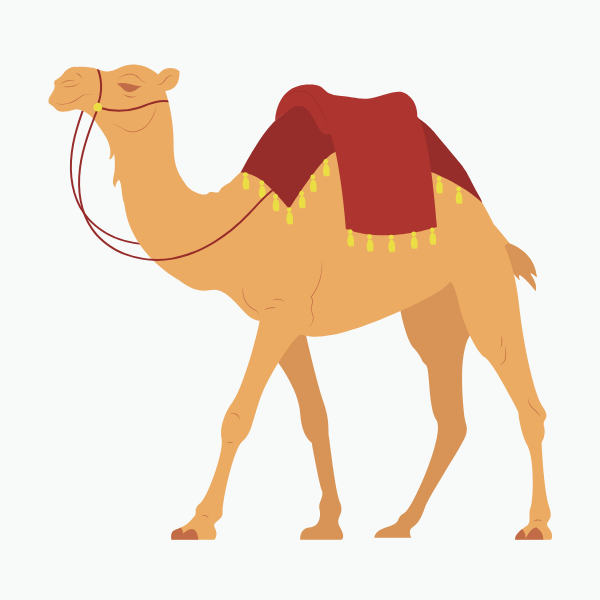
Dromedary Camel
The Dromedary Camel is also called the Arabian Camel. It has one hump on its back and is mainly found in hot, dry regions of North Africa, the Middle East, and parts of Asia. This camel can survive for long periods with little water. People have used Dromedary Camels for transportation, carrying goods, and traveling across deserts for thousands of years.
Bactrian Camel
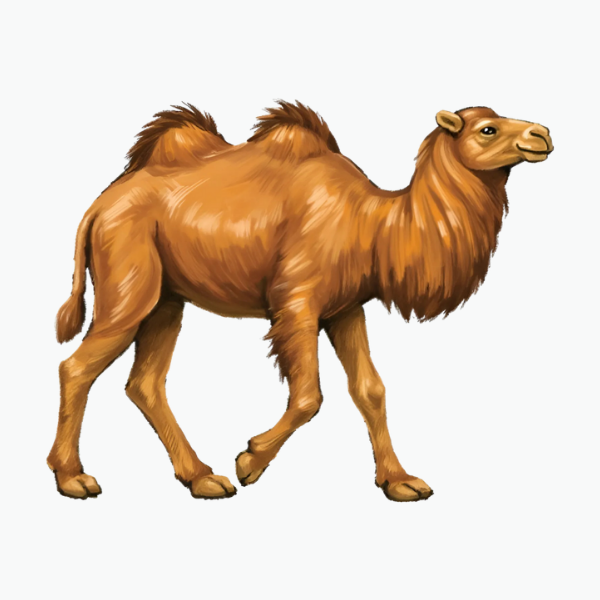
The Bactrian Camel is a large camel with two humps on its back. It is naturally adapted to cold deserts and dry regions of Central Asia. Its thick, shaggy coat protects it from freezing temperatures in winter and helps it stay comfortable in changing weather. Bactrian Camels are strong animals and have traditionally been used to carry people and heavy loads across difficult landscapes.
Wild Bactrian Camel
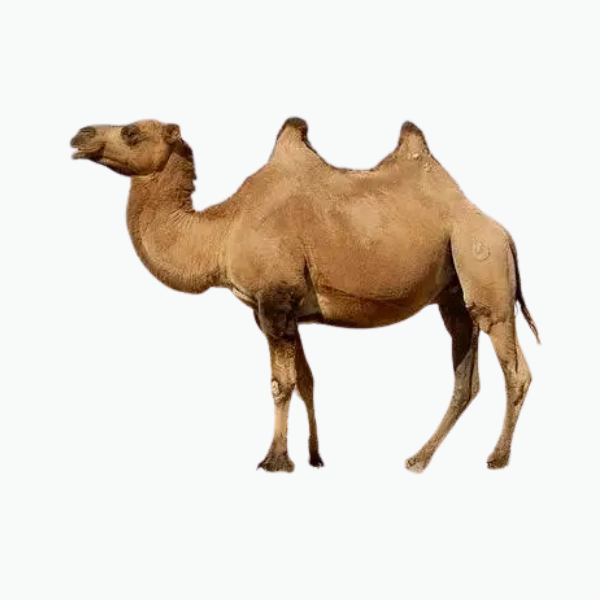
The Wild Bactrian Camel is a rare wild camel that lives in remote deserts of Central Asia. It has two humps and is well adapted to extremely dry conditions. Unlike domesticated camels, it survives independently in harsh environments where food and water are scarce. Its body can handle salty water better than many other mammals. The Wild Bactrian Camel is critically endangered and needs conservation protection.
What Do Camels Eat?
- Grass
- Leaves
- Shrubs
- Thorny plants
- Dry vegetation
- Desert plants
- Seeds and other plant material
The Three Major Species of Camels
│ Camel Species │
└───────────┬────────────┘
┌────────────────────┼────────────────────┐
┌────────┴─────────┐ ┌────────┴─────────┐ ┌────────┴─────────┐
│ Dromedary Camel │ │ Bactrian Camel │ │ Wild Bactrian │
│ (1 Hump) │ │ (2 Humps) │ │ (2 Humps/Endang.)│
└──────────────────┘ └──────────────────┘ └──────────────────┘
1. The Dromedary Camel (Camelus dromedarius)
- Physical Trait: They possess one single hump on their back.
- Habitat: They are perfectly adapted to hot, arid environments and are extensively found across the Middle East, North Africa, Pakistan, and India.
- Role: Highly domesticated, they are valued for long-distance travel, racing, and high-yield milk production.
2. The Domesticated Bactrian Camel (Camelus bactrianus)
- Physical Trait: They feature two humps and grow a thick, shaggy coat of hair in the winter to survive freezing temperatures, which they shed in the summer.
- Habitat: Native to the rocky, cold steppes of Central Asia, particularly in countries like Mongolia and China.
- Role: Historically vital for traders traveling along the ancient Silk Road due to their incredible weight-bearing capacity.
3. The Wild Bactrian Camel (Camelus ferus)
- Physical Trait: They have two humps, but their humps are smaller and more cone-shaped compared to domestic Bactrians. They are also genetically distinct and have never been successfully domesticated.
- Habitat: They live in only a few remote pockets of the Gobi Desert in Mongolia and the Taklamakan Desert in China.
- Survival Marvel: They are incredibly tough and are the only mammals known to survive by drinking saltwater/brackish water when fresh water is unavailable. Fewer than 1,000 of these animals remain in the wild.
Camel Habitat
Camel habitats vary according to species. Dromedaries are strongly associated with hot desert environments, while Bactrian camels are adapted to colder and more variable climates.
- Sandy deserts
- Rocky deserts
- Dry plains
- Semi-desert regions
- Mountain valleys
- Cold desert areas
What Are Camels Used For?
For thousands of years, people have relied on camels for different purposes.
- Transportation
- Carrying heavy loads
- Milk production
- Meat
- Travel across deserts
- Trade routes
- Agricultural work
- Cultural traditions
Camel Behavior
Camels are social animals and may live in groups. They communicate through sounds, body movements, and other behaviors. Domestic camels have a long history of living and working alongside humans.
Although camels are usually calm, they can become defensive or aggressive when frightened, threatened, or poorly handled.
Interesting Facts About Camels
- Dromedary camels have one hump.
- Bactrian camels have two humps.
- A camel’s hump stores fat rather than water.
- Camels can survive in very dry environments.
- Their broad feet help them walk on sand.
- Long eyelashes help protect their eyes from dust.
- Camels are herbivores.
- Some camel species have thick coats for cold climates.
- Camels have been used by humans for thousands of years.
- Wild Bactrian camels are among the most threatened living camel species.
Camel FAQs
How many types of camels are there?
There are three living camel species: Dromedary Camel, Bactrian Camel, and Wild Bactrian Camel.
Which camel has one hump?
The Dromedary Camel has one hump.
Which camels have two humps?
Both the Bactrian Camel and Wild Bactrian Camel have two humps.
Do camels store water in their humps?
No. A camel’s hump mainly stores fat, which can provide energy when food is limited.
What do camels eat?
Camels mainly eat plants such as grass, leaves, shrubs, and other available vegetation.
Where do camels live?
Camels live mainly in deserts and other dry regions. Different species are adapted to hot or cold environments.
Animals Related Articles